Showing posts with label Tim Geithner. Show all posts

Wednesday, April 15, 2009

Pelosi Calls For Commission to Investigate Wall Street Tricks

SPEAKER ADDS SUPPORTS TO PLAN RECENTLY GAINING MOMENTUM
With an eye towards quelling the populist anger roiling across the nation, House Speaker Nancy Pelosi today called for the creation of a commission to root out the causes of Wall Street's meltdown patterned after an obscure Depression-era committee.

In San Francisco to speak about her book encouraging the rise of women in society at a gathering for the Commonwealth Club of California, Pelosi said Americans are angry with the economy and bonuses given to AIG and said at least 75 percent want an investigation into the missteps that led to this recession.
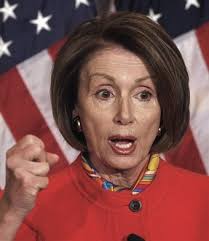
"That's what we would do with this commission, is to make sure it does not happen again." she said.

Pelosi spoke with Treasury Secretary Timothy Geithner this morning about the plan to emulate the Pecora Commission created in 1932. That commission named after the Deputy District Attorney of New York County Ferdinand Pecora followed two failures and benefited by Franklin Roosevelt's election. The commission's findings led to the Securities Act of 1933 and the creation of the Securities and Exchange Commission,itself, alleged to have been lax in regulating Wall Street with Bernard Madoff's infamous Ponzi scheme being the poster boy for this age of decadence.

“Some people can tell you one piece of it. Others can tell you another piece of it. It's really hard to know. Do you understand it?” Pelosi asked rhetorically, “We need a clearer understanding of how we got here.”

Pelosi is not the first politician to allude to the Pecora Commission in recent weeks. Sen. Byron Dorgan called for a new iteration of the committee along with reinstituting the Glass-Steagall Act whi9ch separated commercial and investment banking. Many believe its repeal in 1999 was the impetus for banks and investment firms like Citigroup and Travelers to merge and allow the subprime credit markets to run rampant. A New York Times editorial last month also called for a Pecora-like commission to be created.

Earlier in the day, appearing on the local Fox affiliate KTVU, Pelosi characterized an upswing of “Tea Party” tax protests as window dressing for elite conservative interests in lower taxes calling them “Astroturf”, as a manufactured antonym for “grassroots”.

The Speaker drew upon her personal biography to encourage woman to continue to rise to more positions of power. Her book, Know Your Power: A Message to American Daughters urges woman to get involved in all aspects of community service. Pelosi, herself, is the daughter of the Baltimore establishment and said she found politics both exciting and distasteful. “It taught me I didn't want to be a part of it,” she said.

While raising five children with husband Paul Pelosi, who incidentally spent the speech doting over their newest grandchildren, she slowly became immersed in Bay Area politics with her big break occurring in 1976 when she secured Maryland for a youthful Jerry Brown in the Democratic presidential primaries. Pelosi joked, though, the then-Governor of California had a problem with saying, “thank you.”

Despite no longer being in office and playing to the liberal San Francisco audience, Pelosi also had a few jabs for former President Bush. While saying she “absolutely loves” working with President Obama, she said “having a great intellect saves a lot of time.”

Wednesday, April 08, 2009

Must See TV: Economist Explains The Criminality Of The Collapse

THE COLLUSION BETWEEN THE BANKS AND TREASURY IS SYSTEMIC
If you weren't watching PBS this past week, then you wouldn't know a leading economist leveled some of the most provocative and insightful views yet about the coziness of the bankers with our government and how it continues even in the face of angry Americans losing jobs and money from coast-to-coast.

William K. Black, a professor of economics at the University of Missouri, was also a thorn in the side of the Keating Five in the early 90s. Black told Bill Moyers the credit rating services colluded with banks to unleash high yield, but potential toxic loans to flourish with relatively little government oversight by the Bush Administration. The evidence that rating services like the once-venerable Moody's slapped dubious AAA ratings on so-called pooled "liars loans" where the borrowers information was never verified has been well-known. Black said it was in both the borrowers and mortgage broker interest to inflate their earnings and credit history.

[CLICK HERE TO VIEW WILLIAM BLACK'S INTERVIEW ON BILL MOYERS]


Black's allegations point directly to the problem many people had with Treasury Secretary Timothy Geithner's appointment last December. He is simply doing the bank's bidding within the Obama Administration. The Goldman Sachs cabal of Henry Paulson, Robert Rubin and Lawrence Summers were involved with the company with as much a stake in the proliferation of subprime mortgages than any other institution, yet Federal bailout money was funneled back to Goldman Sachs and Geithner's plan to purchase toxic loans at a premium was cheered by Wall Street. I wonder why?

At one point during the interview Moyers asked if the Treasury was engaging in a cover-up to which Black said, "Absolutely."
They are scared to death. All right? They're scared to death of a collapse. They're afraid that if they admit the truth, that many of the large banks are insolvent. They think Americans are a bunch of cowards, and that we'll run screaming to the exits. And we won't rely on deposit insurance. And, by the way, you can rely on deposit insurance. And it's foolishness. All right? Now, it may be worse than that. You can impute more cynical motives. But I think they are sincerely just panicked about, 'We just can't let the big banks fail.' That's wrong.
Black also maintains if the banks are, indeed, not insolvent why do they need up to $2 trillion in bailout money?

To a banker the inclination to stem the amount of panic in the Market is clear. You don't make or maintain your wealth with a jittery Dow. To those who believe in transparency and justice for the bank's fraudulent behavior, the cover-up is beginning to be worse than the original crime since unemployment continues to rise at a clip of 650,000 jobs a month and the $700 billion allotted to jar open the credit markets have been essentially wasted.

In another interview this week Black sounded even more ominous about this crisis and the diagnosis made by the Treasury when he said it could paralyze the Obama presidency. "It will be the greatest looting of the American people in our history and it will destroy the Obama presidency if it continues." And we've seen the presidential hand-tying one bad policy can have on an Administration with Bush's war in Iraq.

The populist anger that continues to rise is partly a function of the inability to face the fact the same bankers who created this crisis in the name of sheer greed continue to flourish because they have gamed both sides for their financial benefit. At a time when the civic attitude of millions of Americans was at its highest in decades with the election of Barack Obama, no soon has the corruption of Washington totally squashed it.

Tuesday, March 17, 2009

Americans Are Getting Angrier; Will They Take It out On Obama?

REPUBLICANS ARE POISED TO TAKE UP THE POPULIST MANTLE
Here's something a bit worrisome: It is now apparent President Obama failed the first test of his decision-making abilities when he appointed Timothy Geithner to the Treasury. Worse, it was the one cabinet position that needed to sufficiently filled for the times we live. Shockingly, the administration has backed dubious bank-friendly policies and incoherent explanations from Geithner about what he intends to do with the banks. Nobel Laureate Joseph Stiglitz has a fine article in The Nation this week that illustrates the Treasury Department's apprehension to make the tough decisions.

Robert Reich says get rid of him before more damage is done, although he recommends Paul Volcker, whose monetary policies were the reason for the 1981-82 recession--the original worst recession since the Great Depression?

It is possible that we will look back at the administration's feeble attempts to dissuade AIG not to pay up to $165 million in bonuses to the very people who torched the company and the economy as the beginning of populist anger that can be easily co-opted by the Republican party. Most likely, the immense pressure the White House and Congress can apply will force AIG to find some sort of escape clause allowing them to recoup the bonuses, but the damage has been done. While the former president signed off executive orders with impunity, even possibly trashing the Constitution in the process, this president cannot stop an insolvent insurance company masquerading as a hedge fund from doing the wrong thing. This is not the sort of change in Washington Obama vowed to bring.

Although Obama currently garners the support of about two-thirds of opinion polls, it's hard not to see the likelihood of Congressional losses in 2010 and here the seed may have been sown. History has shown the havoc that can be caused with a restless, underemployed electorate. Mix in, an incredibly weak minority party waiting for the perfect campaign theme and you have the recipe for a reawakened Republican party.

By the fall, the poor economy can fairly be viewed as "owned" by Obama's policies and populist anger is something that can easily be molded to your own means. All Republicans would have to do in mid-term elections is point to the perception no one in administration seems to know how to fix the problem, so they just throw "taxpayer" money at it. The Republicans don't even have to be particularly dirty to make the point, either.

Rep. Mitch McConnell makes a cogent point in the Times, "The government has been heavily involved in A.I.G. for some months now. It’s shocking that they would — the administration would come to us now and act surprised about these contracts. Why didn’t they ask the question two weeks ago, before they gave them $30 billion?” An editorial in today's Wall Street Journal also makes this point and rightly points the finger at politicians, too.

If the public continues to see the economy grow worse in tandem with these easily recognizable abuses by the financial sector, it is likely conservatives will make positive gains next year while the image of Obama as the "chosen one" is greatly diminished.

Monday, March 16, 2009

Populist Anger Threatens To Derail Obama

Jon Stewart is a comedian, not a media critic, but he voiced America's frustration with the financial system last week when he sparred with CNBC's Jim Cramer. Robert Reich is an economist who better summed up the essence of Stewart's populist rant in a word: "helpless."

Read more of this article at The Commonwealth Club of California blog at commonwealthclub.blogspot.com

Friday, March 06, 2009

Friedman Says The Unmentionable

NYT COLUMNIST SEES A ROCKY FIRST-TERM FOR OBAMA
It seems like people don't want to face the truth. Some people have been calling this era of economic downturn as not a Great Depression in the making, but, instead the "Great Repression".

It has been said here many times the presence of Treasury Secretary Tim Geithner and Larry Summers in tandem with the hovering spirit of Robert Rubin would portend for more of the same faulty economic decisions that got us into this fiscal turmoil. Nobody wants to say the banks are insolvent even as Citigroup flirted with sub-one dollar stock prices yesterday. And nobody would dare say the early-goings of the nascent Obama administration might flail in response to this crisis until Thomas Friedman wrote it yesterday in The New York Times and others quickly sought to skewer him. For instance, Vanity Fair's political blog.

"But do you know what I fear? I fear that his whole first term could be eaten by Citigroup, A.I.G., Bank of America, Merrill Lynch, and the whole housing/subprime credit bubble we inflated these past 20 years," said Friedman before illustrating how big this banking beast really is and how nobody has a clue how to solve it.
I hope my fears are exaggerated. But ask yourself this: Why couldn’t former Treasury Secretary Hank Paulson solve this problem? And why does it seem as though his successor, Tim Geithner, won’t even look us in the eye and spell out his strategy? Is it because they don’t get it? No. It is because they know — like Roy Scheider in the movie “Jaws,” when he first saw the great white shark — that “we’re gonna need a bigger boat,” and they’re too afraid to tell us just how big.
Instead, the administration seems to be relying on the American people to become inured to the price tags zooming by them. $700 billion there. $350 billion there. $14 billion there and $2 billion in aid to some far-flung despotic third-world country. After time, what's a few billion here or there. Most of us cannot grasp what a billion looks like anyway. Republicans like Sen. John McCain, on the other hand, are appalled at a mere $1.7 million earmarked to study the foul smell of pigs.

In the meantime, things are continuing to get worse. Jobless claims again rose to 651,000 spearing any hope that the we have hit the bottom. In reality, we may have reached that point, but the bottom is just becoming wider and will only persist until the administration confronts the banks in earnest.

I heard an interesting fact last week on Real Time with Bill Maher. The Chinese character for crisis is the same for the word opportunity. An interesting notion that Obama's pledge of change is not wholly grasping.

Tuesday, February 17, 2009

Psst..The Banks Are Insolvent; Please Don't Tell Wall Street

PROPPING UP THE BANKS WILL PROLONG THE RECESSION
Here's the dirty, dark secret nobody with a stake in the economy wants you to dwell upon: the biggest financial institutions in the U.S. are insolvent.

Economists like Paul Krugman and people like Robert Reich have been saying this for awhile, but, they too, seem to bury the sentences in their prose. Everybody seems frightened to deal with the 800-pound elephant sitting in the corner for fear of causing the stock market to dive into a free fall of epic proportions. The rationale from a banker's perspective is sound if you account for the fact that the health of the industry is predicated on consumer confidence in banks. From a political and policy making standpoint, feigning it's importance through the lack of public discourse is dangerous.

On the heels of Tim Geithner's universally-panned debut in unveiling the administration's newest plan to bailout the banks, it should not shock observers that the same group of officials who oversaw the crumbling of Wall Street would find loopholes to further cover the backs of their brethren once they came into power. Nicholas Von Hoffman at The Nation crafts a scenario where the slavish nature of Washington to the banks mirrors the dreaded comparison to Japan's economic "lost decade" of the 1990s.

Try as the nation would, it could not return to prosperity. According to most everybody who has studied it, the reason Japan was unable to cure itself was its policy of propping up the country's major banks, which were largely insolvent.

As mentioned, the banks--Citigroup and Bank of America, notably--are insolvent. While hackneyed Congressmen skewer the executives of these banks for dubious spending habit while receiving government aid, the money in the first round of $350 billion in TARP aid did nothing to release the credit crunch. This phrase has been overused lately, but, the government is really spending good money after bad and it likely will not cease as long as former bankers in the administration continue to enable the industry.

The problem is we live in an era of politicians institutionally frightened to make the tough decisions. The American economy needs to take its bitter medicine. Von Hoffman writes bluntly: "Doubtless they are scared out of their wits at what that might do to the stock market. The market will take a big hit, but in due course it will bobble up again. That's what markets do."

It seems prolonging our current situation by sidestepping the problem is what politicians do.

Tuesday, February 10, 2009

Was Geithner Bailout Conflict A Ruse?

MATTHEW COOPER REPORTS FEW WERE IN FAVOR OF PUNITIVE ACTION AGAINST BANKS
Presidential adviser David Axelrod is looking as weak as his pudgy chin after today's front page article the New York Times. "Geithner Said To Have Prevailed on the Bailout" says it all.

It's no surprise the banker who presided, maybe even coddled Wall Street as the President of the Federal Reserve of New York, would prescribe business as usual, but it is surprising he was able to convince the President during a time of populist revolt over the banking industry.

The Times piece said, "Mr. Geithner also expressed concern that too many government controls would discourage private investors from participating." It was unclear exactly what those restrictions would entail, though.

Former Time columnist Matthew Cooper reported on his blog for Talking Points Memo that few in the meetings with Geithner were in favor of the kind of punitive action many in the country would like to see.

My nugget to add to this is that no one on the economic team, so far as I can tell, was pushing for the kind of showy, punitive measures that might have made today's ugly roll out of the new bailout plan at least more appealing to those who want to see banks punished.

So which portrayal is accurate? Geithner continuing to enable Wall Street, Axelrod and other fighting with a populist sword or the cynical view: Axelrod's accounting of the dispute is a ruse.

Saturday, February 07, 2009

GOP Still Doesn't Get It Or Give It

WHO NEEDS TAX CUTS FOR A CAR WHEN YOU'RE BROKE?
Patriotism and necessity aside, forging a bipartisan bill with Republicans this early in the Obama presidency was always going to be a tall order. It's a quite normal for the minority party in Washington to show its mettle, if puny in relation to Democrats, but the political gamesmanship on the part of the GOP only further displays their disconnect to the plight of Americans.

I have a friend who depends on a 40-hour work week and medical insurance to pay the rent and stay healthy. Last week, her employer slashed her hours and nixed her health coverage. Another was recently laid off to sit at home with her three children and wonder what the next few months has to offer. State workers in California received what amounts to a 10 percent pay cut to stay home from their jobs two days a month. That times are tough is no longer a throwaway catch phrase nowadays but reality. Things are getting worse. The numbers even show it and we feel it.

Democrats could have probably been pushed into a worse compromise than the one made yesterday with Senate Republicans, but the existence of more tax cuts is only a reminder that the GOP doesn't get it.

Why would Americans need $30 billion tax cuts to encourage the purchase of new homes and automobiles. Shockingly, new digs and a fully-loaded Buick is not high on the wish list when you are wondering about your next paycheck. Besides, would the tax credits offset the inability of regular Americans to receive a fair interest rate on a loan? It's not likely.

I think this point of c0ntinued economic inequity and political blindness on the part of the GOP is becoming more pervasive since the day President Obama announced an executive salary cap on firms who accept bailout funds. By shaming CEOs into accepting only $500k, he made the beleaguered Titans of finance look petty and greedy. How ridiculous did countless talking heads and lobbyists of executives seem when they pleaded across the board that such a low salary would make it difficult to attract "good talent". To which the country screamed, "Where was the good talent before we got into this mess?" I've never found the stuffed suits traipsing along every Financial District as nothing more than falsely stoked bubbles of testosterone and mythologized machismo. Really? Are these "banksters" nothing more than football coaches in fine tailored suits fitted with bluetooths instead of head phones?

At the very least, we must continue to veer away from principles and characters previously associated with this downturn in America's economy and morally specific predilection towards greed. This means straying away from Obama's main guys at the Treasury--Tim Geithner and Larry Summers--and economic recipes like tax cuts and laissez-faire government. Recovery is about stimulus. As the President said this week the stimulus is about spending and it needs to reach the state and local level for the mood of disheartened unemployed Americans rise hopeful again. In the meantime, the GOP continue to be nothing but an opposition party to Democrats and to the American people.

Thursday, January 22, 2009

Taxing: Kennedy Out, Geithner In?

GENDER INEQUALITY REARS ITS HEAD UNNOTICED

At the moment it is hard to establish exactly what is going down regarding Caroline Kennedy's on/off/on/off Senate bid. Did she take herself out the running to save face on the knowledge New York Governor David Paterson has chosen some one else, presumably first-term Congresswoman Kirsten Gillibrand?

The initial response that Kennedy was so distraught by Uncle Teddy Kennedy's seizure on inauguration day was a ridiculous red herring apparently drawing the ire of some in the Kennedy clan. The latest rumor that tax problems regarding a housekeeper is the real reason Paterson shied away from Kennedy is plausible. Then, again, it could also be a convenient excuse. Yet, on the basis of fairness, if tax problem did derail Kennedy's bid for the Senate, it raises concerns from a gender point-of-view.

How was Tim Geithner approved by the Senate Finance Committee today with apparent egregious tax bills outstanding and Kennedy was excluded from Congress because of hers?

Detractors will say Kennedy just was not qualified to a senator. Is someone like Gillibrand experienced enough? Did we not recently elect a perceived novice to the Oval Office.

On the practical side, it was not the Kennedy name that appealed to some, but the money behind the brand. The next senator from New York will need huge resources in one of the most expensive media centers in the world and campaign twice in the next years--due to the remainder of Hillary Clinton's term in 2010.

One media outlet in sexist fashion, counted the number of "you knows" Kennedy uttered in an interview with The New York Times at 138. Would an editor bring a "you know" clicker to count a mans quirky use of language?

You know, once again, the election of Barack Obama did not radically change the attitudes of Americans with regard to race and gender equity. They still exist in full-force when the man now in charge of the nation's money supply gains his position--at a time when the job is far more crucial than that of one senator out of one hundred--with serious questions regarding his payment of taxes, while a woman with reportedly the same problem is shut out of hers.

This connection is not being made today and that, in itself, is the real problem.

Thursday, January 15, 2009

Geithner Doesn't Pay Taxes; Congress Doesn't Pay Attention

LINKS TO THE PLAYERS BLAMED FOR POOR ECONOMY NOT ADDRESSED

Treasury nominee Tim Geithner doesn't pay his taxes. This piece of information did not preclude Barack Obama from choosing him anyway. The man who would be in charge of the Internal Revenue Service has an aversion to paying taxes. I have an aversion to it, too.

Comedian Steven Colbert said, "I don't pay my taxes, either. Why can't I be Treasury secretary?"

Republican Senator Jeff Sessions is right, "the man who wants to be the top tax collector in America hasn’t paid his taxes.”

Despite the inconvenient truth about Geithner and another example of the new administration lax vetting process, the nomination took a hit, but still rolls, at least, for now.

The Associated Press speculated today that the postponement of Geithner's confirmation until the day after the inauguration next Tuesday may allow the chorus of disenchantment to rise. Most likely, the postponement is designed to push the story deep into the news sections of papers across the country planning splashy commemorative editions of Obama's first day in office.

Yet, the New York Times and other publications gloss over all of this and report Geithner will likely be confirmed nonetheless.

In spite of Geithner's problems, his nomination should be shrouded in more doubt than Capitol Hill is willing to delve. Many say he is capable, but as opposed to whom? George W. Bush and the presidency? Geithner presided over Wall Street--the epicenter of much of the greed and deregulation that has ground the economy nearly to a halt. He comes from the Robert Rubin school of economics that easily extends blame for our current situation past the era of President Bush and into the late stages of the Clinton presidency.

Geithner is cozy with the bank. Familiar with the players who built the house of cards which ultimately fell with the housing bubble and it was not until word leaked that he paid his four-year-old tax bill last week that Congress began to question his nomination.

Again, nobody is looking out for the American people.

Sunday, November 30, 2008

Geithner & Summers: Financial Enablers Return

Admittedly, the economy will be first and foremost on Barack Obama's presidential agenda. The president-elect has liberally sprinkled ex-Clintonites throughout his early cabinet and administration posts, but filling the Treasury with acolytes of former Fed boss Robert Rubin is worrisome.

Amidst, calls to bailout ex-Enron enabler Citibank, the fingerprints of Rubin lie within that companies financial blunders and the economy as a whole.

The Sunday New York Times ran a lengthy article on Citibank's foolish investment practices which enhanced the short term while nearly ruining the country's one-time largest bank.
Citigroup insiders and analysts say that Mr. Prince and Mr. Rubin played pivotal roles in the bank’s current woes, by drafting and blessing a strategy that involved taking greater trading risks to expand its business and reap higher profits.
It was under President Clinton that Rubin, under the Gramm-Leach-Bliley Financial Services Act repealed much of the Depression-era Glass-Steagall Act allowing banks to consolidate seemingly every financial service under one house. Citibank was one of the main beneficiaries of the act allowing it to absorb Travelers Insurance.

With the picks of New York Federal Reserve boss, Tim Geithner as Treasury Secretary and former Clinton treasury chief Lawrence Summers, the point that the same guys at the helm during the nascent stages of the financial debacle have resurfaced under a Democrat in Washington.

It's inevitably that Geithner, while lauded as intelligent and capable, will have to answer questions why Wall Street, located in his jurisdiction, did not prepare for its precipitious fall.

The mentor/pupil scenario that Time magazine puts forth in the Dec. 8 issue is a bit disconcerting also. According to the articles, Geithner (the pupil) was given the secretary's job on the basis that he could "handle" Summers (the mentor). Presumably, Summers would have been reunited with the Treasury office is not for his sexist remarks about women while at the helm at Harvard.

We are to be believed that Summers will not wield power from the National Economic Council and the same people who felt deregulation was a viable option 10 years ago will see the nation's economy differently today?

It was a bit disingenious and politically expedient for Obama to vow to bring change to Washington without a few old hands, yet choosing the very men responsible for the crisis that may swallow his presidency is extremely foolhardy.