Showing posts with label economy. Show all posts

Thursday, April 16, 2009

Prophets Of Doom? Meet The Regents Of Reality

WITHOUT THESE ECONOMISTS THE TOUGH DECISIONS WON'T BE MADE
Salon's Andrew Leonard lays out who he calls the "Cassandras" and Chicken Little's of economic punditry. Read it here. Whether the piece is meant as a jab at the perceived bottoming out of the economy or an homage; one thing is clear from Paul Krugman to Nouriel Roubini (and I might offer Robert Reich) these are the voices that have consistently shifted overexuberance to the side of caution and reason.

Start with Leonard's assessment of Krugman: "Without missing a beat, Paul Krugman went from being George Bush's most passionate and prominent critic to fulfilling the exact same role for Barack Obama."

This is either a criticism of Krugman's across-the-board disgust with any president or he posits the Nobel Prize laureate feels he can sell papers writing from the side of the minority. It's actually neither, but an inkling shared by this blog that the good ol' boys in Manhattan run the Treasury not matter what party is in power.

The consistent opinion of most of these men says the bailouts are not big enough, but the political solution must take into account the same Americans angry about taxpayer-funded bonuses and a poor economy. With both sides taken into account, all the Obama Administration can muster is what we have received. The hope and the prayer that it is just barely enough to get the country barely above water.

Wednesday, April 15, 2009

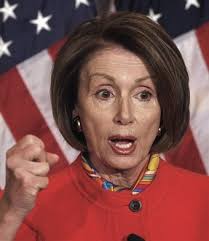
Pelosi Calls For Commission to Investigate Wall Street Tricks

SPEAKER ADDS SUPPORTS TO PLAN RECENTLY GAINING MOMENTUM
With an eye towards quelling the populist anger roiling across the nation, House Speaker Nancy Pelosi today called for the creation of a commission to root out the causes of Wall Street's meltdown patterned after an obscure Depression-era committee.

In San Francisco to speak about her book encouraging the rise of women in society at a gathering for the Commonwealth Club of California, Pelosi said Americans are angry with the economy and bonuses given to AIG and said at least 75 percent want an investigation into the missteps that led to this recession.

"That's what we would do with this commission, is to make sure it does not happen again." she said.

Pelosi spoke with Treasury Secretary Timothy Geithner this morning about the plan to emulate the Pecora Commission created in 1932. That commission named after the Deputy District Attorney of New York County Ferdinand Pecora followed two failures and benefited by Franklin Roosevelt's election. The commission's findings led to the Securities Act of 1933 and the creation of the Securities and Exchange Commission,itself, alleged to have been lax in regulating Wall Street with Bernard Madoff's infamous Ponzi scheme being the poster boy for this age of decadence.

“Some people can tell you one piece of it. Others can tell you another piece of it. It's really hard to know. Do you understand it?” Pelosi asked rhetorically, “We need a clearer understanding of how we got here.”

Pelosi is not the first politician to allude to the Pecora Commission in recent weeks. Sen. Byron Dorgan called for a new iteration of the committee along with reinstituting the Glass-Steagall Act whi9ch separated commercial and investment banking. Many believe its repeal in 1999 was the impetus for banks and investment firms like Citigroup and Travelers to merge and allow the subprime credit markets to run rampant. A New York Times editorial last month also called for a Pecora-like commission to be created.

Earlier in the day, appearing on the local Fox affiliate KTVU, Pelosi characterized an upswing of “Tea Party” tax protests as window dressing for elite conservative interests in lower taxes calling them “Astroturf”, as a manufactured antonym for “grassroots”.

The Speaker drew upon her personal biography to encourage woman to continue to rise to more positions of power. Her book, Know Your Power: A Message to American Daughters urges woman to get involved in all aspects of community service. Pelosi, herself, is the daughter of the Baltimore establishment and said she found politics both exciting and distasteful. “It taught me I didn't want to be a part of it,” she said.

While raising five children with husband Paul Pelosi, who incidentally spent the speech doting over their newest grandchildren, she slowly became immersed in Bay Area politics with her big break occurring in 1976 when she secured Maryland for a youthful Jerry Brown in the Democratic presidential primaries. Pelosi joked, though, the then-Governor of California had a problem with saying, “thank you.”

Despite no longer being in office and playing to the liberal San Francisco audience, Pelosi also had a few jabs for former President Bush. While saying she “absolutely loves” working with President Obama, she said “having a great intellect saves a lot of time.”

Friday, April 10, 2009

Wall Street Gets Richer; Americans Still Losing Jobs

RECOVERY WON'T RESONATE UNTIL AMERICANS ARE WORKING AGAIN
Way too many journalists are jumping on the economic recovery bandwagon especially when the Dow's 25 percent rise the past month does little to make life easier for you and me.

While some point to Wells Fargo's surprisingly healthy first quarter (Noriel Roubini said Wells Fargo was one of the weaker banks last month in Time. What happened?) as proof the recession has bottomed out, unemployment is still 8.5 percent and likely rising at the same clip. A chipper AP story reports the first week of April had the lowest amount of new jobless claims in months. I'm not sure how much an indicator one good week in the middle of 40 does for the unemployed. This New York Times piece speculates how the strong Dow could be covering up significant problems in the overall economy.

The underlining message in nearly every story, except a very cautiously optimistic article in the Boston Globe today, is that the financial sector is doing well and depending on your politics, the benefits will never "trickle down" to the pocket books of struggling Americans. It's true that short and long-term interest rates are unbelievably low, but how will it translate into more construction of homes? The inventory of already built new homes is high and recently foreclosed homes are even higher. This may be where Wells Fargo's announced $190 billion in new loan applications are emanating. Once the glut of inventory begins to deplete in relation to low interest rates where will this segment of the economy look like?

The job of Wall Street is to keep things positive; to eradicated jitters and to keep the wheels of finance rolling. It really has nothing to do with the problems Americans are dealing with everyday, at least, in the short term. It's likely over a half million more workers will get a pink slip this month. Add to this the previous 5 million and you have quite a segment of the population scrimping and saving and not purchasing goods and services. Don't tell Americans the economy is picking up while they sit and wait for a new job.

Thursday, April 09, 2009

Feinstein: No Assault Weapons Ban Yet


DEMS HAVE FLOURISHED IN THE WEST WITHOUT TALKING GUNS
Sen. Dianne Feinstein told "60 Minutes", "The National Rifle Association essentially has a stranglehold on the Congress." And with that don't look for a reinstatement of the assault weapons ban she authored in the early 1990s anytime soon.

In interview to be aired this Sunday, Feinstein believes there is no time for gun control legislation but would considered it later. Such comments come less than a month after four Oakland police officers were gunned down by a parolee with an AK-47. President Bush allowed the initial ban to expire in 2004 while Democrats made significant electoral inroads in the once-bleeding red Western states like Montana and South Dakota by not focusing on gun control.

While the congressional calendar may be chock full with health care reform, the economy and two overseas wars, Democrats don't want to mess with a once troublesome issue that has been significantly neutralized. It's no surprise President Obama breezed through the primaries and general election without dealing with either gun control or abortion rights--two issues Republicans once hammered more liberal-leaning candidates with.

Can Democrats live with legislators who seemingly ignore the continual rise in gun use in our society? It seems like anything else in these trying economic times, our priorities are more fixated on maintaining full employment and keeping the bill collector at bay rather than focusing on complex and controversial social issues better suited to be argued in better times (i.e. when we have nothing better to worry about).

Wednesday, April 08, 2009

Must See TV: Economist Explains The Criminality Of The Collapse

THE COLLUSION BETWEEN THE BANKS AND TREASURY IS SYSTEMIC
If you weren't watching PBS this past week, then you wouldn't know a leading economist leveled some of the most provocative and insightful views yet about the coziness of the bankers with our government and how it continues even in the face of angry Americans losing jobs and money from coast-to-coast.

William K. Black, a professor of economics at the University of Missouri, was also a thorn in the side of the Keating Five in the early 90s. Black told Bill Moyers the credit rating services colluded with banks to unleash high yield, but potential toxic loans to flourish with relatively little government oversight by the Bush Administration. The evidence that rating services like the once-venerable Moody's slapped dubious AAA ratings on so-called pooled "liars loans" where the borrowers information was never verified has been well-known. Black said it was in both the borrowers and mortgage broker interest to inflate their earnings and credit history.

[CLICK HERE TO VIEW WILLIAM BLACK'S INTERVIEW ON BILL MOYERS]


Black's allegations point directly to the problem many people had with Treasury Secretary Timothy Geithner's appointment last December. He is simply doing the bank's bidding within the Obama Administration. The Goldman Sachs cabal of Henry Paulson, Robert Rubin and Lawrence Summers were involved with the company with as much a stake in the proliferation of subprime mortgages than any other institution, yet Federal bailout money was funneled back to Goldman Sachs and Geithner's plan to purchase toxic loans at a premium was cheered by Wall Street. I wonder why?

At one point during the interview Moyers asked if the Treasury was engaging in a cover-up to which Black said, "Absolutely."
They are scared to death. All right? They're scared to death of a collapse. They're afraid that if they admit the truth, that many of the large banks are insolvent. They think Americans are a bunch of cowards, and that we'll run screaming to the exits. And we won't rely on deposit insurance. And, by the way, you can rely on deposit insurance. And it's foolishness. All right? Now, it may be worse than that. You can impute more cynical motives. But I think they are sincerely just panicked about, 'We just can't let the big banks fail.' That's wrong.
Black also maintains if the banks are, indeed, not insolvent why do they need up to $2 trillion in bailout money?

To a banker the inclination to stem the amount of panic in the Market is clear. You don't make or maintain your wealth with a jittery Dow. To those who believe in transparency and justice for the bank's fraudulent behavior, the cover-up is beginning to be worse than the original crime since unemployment continues to rise at a clip of 650,000 jobs a month and the $700 billion allotted to jar open the credit markets have been essentially wasted.

In another interview this week Black sounded even more ominous about this crisis and the diagnosis made by the Treasury when he said it could paralyze the Obama presidency. "It will be the greatest looting of the American people in our history and it will destroy the Obama presidency if it continues." And we've seen the presidential hand-tying one bad policy can have on an Administration with Bush's war in Iraq.

The populist anger that continues to rise is partly a function of the inability to face the fact the same bankers who created this crisis in the name of sheer greed continue to flourish because they have gamed both sides for their financial benefit. At a time when the civic attitude of millions of Americans was at its highest in decades with the election of Barack Obama, no soon has the corruption of Washington totally squashed it.

Wednesday, March 18, 2009

AIG CEO: Give Them Half

AMERICANS DEMAND ALL OF THE BONUSES RETURNED
I use to know a little kid who realized bargaining from a position of power had its advantages. She would start by asking for four scoops of ice cream--a totally unacceptable proposition--while knowing she would settle for just two. It worked. Is that what the CEO of AIG is trying to pull with Congress?

Edward Liddy testified before Congress and said he has encouraged those who received over $100,000 bonuses to return half of the windfall to the company. Robert Scheer sheds more light on the executive who also led AIG on a $440,000 company excursion last year.

AIG believes American are up in arms because they believe the failed executives received too much money, but deserved a little something for running the company and the U.S. Treasury into the ground. Just when you thought the AIG debacle could get worse, the captains of American finance, with their heads in piles of $100 bills find a new low.

The New York Times article insinuates Liddy's offer is being looked at favorably by Congress, wait until tomorrow when their constituents flood their phone systems and email servers with a constant litany of anger for this new middle way.

Americans do not trust Congress as far as they can collectively throw them to handle each of these bailouts. Recouping half of something when none was deserved is not acceptable. Over 400 shameful employees of AIG split $165 million in bonuses after accepted nearly $150 billion in taxpayer supported bailout money. We see at it as it is: the rich getting richer by making us poorer. This time, though, we're wise to them.

Monday, March 16, 2009

Populist Anger Threatens To Derail Obama

Jon Stewart is a comedian, not a media critic, but he voiced America's frustration with the financial system last week when he sparred with CNBC's Jim Cramer. Robert Reich is an economist who better summed up the essence of Stewart's populist rant in a word: "helpless."

Read more of this article at The Commonwealth Club of California blog at commonwealthclub.blogspot.com

Tuesday, February 24, 2009

Bankers Break It, Taxpayers Buy It

NATIONALIZATION NOT IMMINENT; YET GROUNDWORK IS BEING LAID
The Citibank web site has a curious marketing slogan atop its home page, "we never sleep." Presumably, the motto means customer's can do their banking anytime, but with nationalization of banks becoming more likely by the day, it could be an admission of many sleepless night to come.

The past week has seen more than a whisper campaign from some Democrats and few leading economists that the short-term remedy for the banking system is nationalization. Sen. Chris Dodd has said it may "unavoidable", which is nearly equivalent to saying, "Folks, get ready. It's happening." It's no wonder the stock market, although briefly rallied today, is beginning to see the reckoning a collapse of Citibank, Bank of America and Wells Fargo could mean to the economy and the administration is slowly setting the stage for nationalization. For the time being, though, President Obama and Fed Chairman Ben Bernanke say nationalization is not on the radar. Bernanke's comments today stoked Wall Street and that was his intent.

The Washington Post reports today the Obama administration tweaked the terms of government assistance by demanding common stock in lieu of cash. "The change paves a road toward nationalization for the most troubled large banks," according to the Post. A piece on Bloomberg.com goes further in calling nationalization inevitable.

Nationalizing the nation's top banks has its drawbacks. With taxpayers already shouldering a large burden of risk that is likely to increase in the future, backing the financial sector may be too much. Some economists even believe another stimulus bill of nearly the same sticker price will be needed within two years. On the other hand, taxpayers saw little in return in the form of consumer lending after the initial $350 billion bailout money passed late last year and news reports of lavish executive spending and multi-million dollar bonuses left a lingering distrust of banks to apply the aid judiciously.

How poor is the health of the nation's biggest financial institutions? The grand sage of the credit mess, New York University Professor Nouriel Roubini laid it out in this week's issue of Time, saying Citibank is "on the way to ICU," Bank of America should "prepare the transfusion" and surprisingly, Wells Fargo needs a "Defibrillator. Stat!"

The poor health of these once mighty institution is a reminder of how their bottom line's were nothing more than a house of cards. Just 16 months ago, Bank of America and Citigroup were quarterly flipping top positions for the title of world's largest bank. Today, they may be on the verge of being owned by the biggest economy in the world.

Saturday, February 21, 2009

Is GM About To Lead The Nationalization of Medicine?

OBAMA ADMINISTRATION TELLS GM TO RESTRUCTURE
American economic monoliths tend to steer the wheels of commerce by their sheer size and influence. A state like California can enact sweeping environmental laws that leads other states to do the same, and when a company like McDonald's acquiesces to posting nutritional information, others follow. As General Motors and the United Auto Workers iron out a deal involving its vaunted health care challenges, will its decision change how others do business and the debate due to commence in Washington?

As a part of GM's vast restructuring plan, the automaker is negotiating with the UAW to change the terms of the 2007 agreement that created a $35 billion trust fund for employee health care. To justify additional government bailout dollars, GM must show Washington details for future plans. The New York Times noted, GM "has to address how a company that lost more than $20 billion last year can afford $5 billion a year in medical bills."

Matt Miller, whose book The Tyranny of Dead Ideas identifies the role of companies paying for employee health care benefits as one of those mortally-wounded ideas. Instead, he believes the government should carry the burden like every other nation in the industrialized world. In his book, Miller writes:
The second force — The Rush for the Exits — is corporate America's desire to stop providing health care and pensions to its employees. To be sure, these costs are soaring in ways that seem unsustainable, especially when competing firms in other nations bear fewer of them. Still, American business leaders act today as if their search for an "exit strategy" on benefits is the end of the conversation. What happens to the millions of workers who are left unprotected if companies simply walk away?
Miller told NPR last month that the government would need to raise taxes to foot the bill, but with Baby Boomers retiring, taxes will increase anyway. "We need to tax ourselves more smartly ... [by] cutting taxes on things like payrolls, which hurt lower-income workers and kill jobs, and raising taxes on dirty energy, which we want to cut back on because of our environmental goals," said Miller.
The Obama administration may be signaling a willingness to allow GM to tinker with health care, according to statements made by his adviser David Axelrod and the naming of Ron Bloom as a key adviser to the Treasury Department. Bloom, according to the Wall Street Journal, is known for forcing parties to make significant concessions.

If GM is able to restructure its health-care responsibilities under the eyes of the White House, health-care reform critics and proponents alike will be wondering whether it could be the harbinger of the wholesale transfer of health care from private industry to the public sphere in the future.

Tuesday, February 17, 2009

Psst..The Banks Are Insolvent; Please Don't Tell Wall Street

PROPPING UP THE BANKS WILL PROLONG THE RECESSION
Here's the dirty, dark secret nobody with a stake in the economy wants you to dwell upon: the biggest financial institutions in the U.S. are insolvent.

Economists like Paul Krugman and people like Robert Reich have been saying this for awhile, but, they too, seem to bury the sentences in their prose. Everybody seems frightened to deal with the 800-pound elephant sitting in the corner for fear of causing the stock market to dive into a free fall of epic proportions. The rationale from a banker's perspective is sound if you account for the fact that the health of the industry is predicated on consumer confidence in banks. From a political and policy making standpoint, feigning it's importance through the lack of public discourse is dangerous.

On the heels of Tim Geithner's universally-panned debut in unveiling the administration's newest plan to bailout the banks, it should not shock observers that the same group of officials who oversaw the crumbling of Wall Street would find loopholes to further cover the backs of their brethren once they came into power. Nicholas Von Hoffman at The Nation crafts a scenario where the slavish nature of Washington to the banks mirrors the dreaded comparison to Japan's economic "lost decade" of the 1990s.

Try as the nation would, it could not return to prosperity. According to most everybody who has studied it, the reason Japan was unable to cure itself was its policy of propping up the country's major banks, which were largely insolvent.

As mentioned, the banks--Citigroup and Bank of America, notably--are insolvent. While hackneyed Congressmen skewer the executives of these banks for dubious spending habit while receiving government aid, the money in the first round of $350 billion in TARP aid did nothing to release the credit crunch. This phrase has been overused lately, but, the government is really spending good money after bad and it likely will not cease as long as former bankers in the administration continue to enable the industry.

The problem is we live in an era of politicians institutionally frightened to make the tough decisions. The American economy needs to take its bitter medicine. Von Hoffman writes bluntly: "Doubtless they are scared out of their wits at what that might do to the stock market. The market will take a big hit, but in due course it will bobble up again. That's what markets do."

It seems prolonging our current situation by sidestepping the problem is what politicians do.

Obama Makes Friends; GOP Still The Meanie

Now that President Obama signed the $787 billion stimulus package into law with a smidgen of bipartisan support, what's next on the "working with the other guys" front?

The New Yorker's Hendrik Hertzberg believes the President will not shelve his support of reaching out to Congressional Republicans. He even goes so far to compare his resolve to that of the Civil Rights leaders and even Ghandi.

Fifty years ago, the civil-rights movement understood that nonviolence can be an effective weapon even if—or especially if—the other side refuses to follow suit. Obama has a similarly tough-minded understanding of the political uses of bipartisanship, which, even if it fails as a tactic for compromise, can succeed as a tonal strategy: once the other side makes itself appear intransigently, destructively partisan, the game is half won. Obama is learning to throw the ball harder. But it’s not Rovian hardball he’s playing. More like Gandhian hardball.

If Obama continues this gambit in wooing Republicans without compromise he could seriously anger the left--a constituency that feels it was purposely denied access to government by the Bush administration for eight years. Will Obama spend energy on the GOP regarding health care or even the likely next confrontation over the Treasury's $2 billion overhaul of the banking industry? Unfortunately, if Obama sticks to his plan of attack, Washington may be on the verge of grinding to a halt in a wholly different way to when the Senate was virtually 50-50.

As noted last week and lampooned on Saturday Night Live, the GOP leadership has a plan for the next 18 months--obstructionism followed by the framing of the poor economy as solely Obama's baby.

Reverting back to ones childhood might be instructive. How many times do you attempt to play friendly with the kid who had all the cool toys, but did not allow you to partake in the fun? Once? Twice? By the third time you either found another friend or push the kid into the shrubs. If Republicans don't play nice, eventually Democrats are going to begin shoving conservatives into the icy Potomac.

Monday, February 16, 2009

GOP Plays CSI With Economy

IF ECONOMY CONTINUE TO TANK IN '10; GOP IS 'INNOCENT'
The politics over the stimulus plan and its near-unanimous rejection by congressional Republicans is already taking center stage for the drama that will be the 2010 mid-term elections. Robert Reich wrote an interesting blog posting this week exploring the reasons why Republicans will not have a thing to do with the proposal.
Republicans don't want their fingerprints on the stimulus bill or the next bank bailout because they plan to make the midterm election of 2010 a national referendum on Barack Obama's handling of the economy. They know that by then the economy will still appear sufficiently weak that they can dub the entire Obama effort a failure -- even if the economy would have been far worse without it, even if the economy is beginning to turn around.
During two votes in the U.S. House of Representatives, no Republican backed either version of the stimulus. It took a few centrist-leaning Northeastern Republicans to win passage by a single vote in the Senate. A Reuters story yesterday implied that President Obama's rival Sen. John McCain was portraying the nascent administration as adverse to bipartisanship and characterized the plan by saying, "I think that the majority of people understand that this was generational theft." Democrats, conversely, begin to complain that the bill was too bipartisan -- even without GOP cooperation. In an interview with conservative newsweekly NewsMax, the leader of 1994's "Contract with America" Newt Gingrich said he "absolutely" sees a connection between when Republicans took over the House and 2010.

Irwin M. Stelzer imparts these talking points while writing in The Weekly Standard and illustrates this point by saying that Obama "now owns the recession." By pegging the troubled economy solely on Obama, these critics may believe that the president cannot possibly make in-roads in quite enough time for congressional elections next year.
He has asked to be judged by whether this bill and other measures he will propose create or "save" 3.5-to-4 million jobs, the number lost so far since unemployment turned up. Forget "save" -- if unemployment keeps rising, voters are not likely to rally around the slogan "It would be still worse if I hadn't spent your trillions." What the President has done is to promise what he certainly can't deliver in time for the congressional elections next year -- a reversal of job destruction, and millions of new jobs, said Stelzer.
When it's all said and done, it's still all about the economy, stupid, as Bill Clinton's campaign declared in 1992. How President Obama, congressional Democrats and the Republican opposition react to that in 2009 will be a tale we're likely to hear a lot about in 2010.

Stim Bill Isn't Sufficiently Super-Sized

DEALING WITH THE GOP DEFLATED THE PLAN'S OOOMMPH
President Obama will likely sign a stimulus bill this week roughly the same size he initially offered, but wholly different in composition. Some like Robert Reich and New York Times columnist Paul Krugman never thought it was large enough in the first place, and the watered down bill is furthering their anxiety. Krugman wrote last week:
And I don’t know about you, but I’ve got a sick feeling in the pit of my stomach — a feeling that America just isn’t rising to the greatest economic challenge in 70 years. The best may not lack all conviction, but they seem alarmingly willing to settle for half-measures. And the worst are, as ever, full of passionate intensity, oblivious to the grotesque failure of their doctrine in practice.
During a speech last month at The Commonwealth Club of California, former Labor Secretary Robert Reich reiterated his belief that the stimulus bill should be over $900 billion or more over the next two years. On his blog he wrote this week:

But what if the stimulus isn't big enough? (I fear it won't be, given the large and growing gap between what the economy can produce at near full-employment and the meager demand coming from consumers and businesses.) And what if the bailout doesn't quite work? (It may not, given that the banking system is collapsing and many banks are actually insolvent.) The economy in November of 2010 may be worse than it is now, with no turnaround in sight.

Reich also predicted during his Commonwealth Club address that President Obama might bargain with Republicans to win votes in a bipartisan fashion. This indeed occurred, and the nearly across-the-board rejection by Republicans of the plan has rankled many Democrats. Joan Walsh at Salon wrote today about President Obama, "He better have learned that Washington bipartisanship is dead." Even the president's chief of staff, Rahm Emanuel, admitted that working with congressional Republicans who were dead set against the bill was a mistake. Not surprisingly, the editors at the conservative National Review declared President Obama's economic plan already has a ring of "no-confidence" surrounding it.

This article and others can be read at the Commonwealth Club of California's blog, commonwealthclub.blogspot.com.

Tuesday, February 10, 2009

Was Geithner Bailout Conflict A Ruse?

MATTHEW COOPER REPORTS FEW WERE IN FAVOR OF PUNITIVE ACTION AGAINST BANKS
Presidential adviser David Axelrod is looking as weak as his pudgy chin after today's front page article the New York Times. "Geithner Said To Have Prevailed on the Bailout" says it all.

It's no surprise the banker who presided, maybe even coddled Wall Street as the President of the Federal Reserve of New York, would prescribe business as usual, but it is surprising he was able to convince the President during a time of populist revolt over the banking industry.

The Times piece said, "Mr. Geithner also expressed concern that too many government controls would discourage private investors from participating." It was unclear exactly what those restrictions would entail, though.

Former Time columnist Matthew Cooper reported on his blog for Talking Points Memo that few in the meetings with Geithner were in favor of the kind of punitive action many in the country would like to see.

My nugget to add to this is that no one on the economic team, so far as I can tell, was pushing for the kind of showy, punitive measures that might have made today's ugly roll out of the new bailout plan at least more appealing to those who want to see banks punished.

So which portrayal is accurate? Geithner continuing to enable Wall Street, Axelrod and other fighting with a populist sword or the cynical view: Axelrod's accounting of the dispute is a ruse.

Saturday, February 07, 2009

GOP Still Doesn't Get It Or Give It

WHO NEEDS TAX CUTS FOR A CAR WHEN YOU'RE BROKE?
Patriotism and necessity aside, forging a bipartisan bill with Republicans this early in the Obama presidency was always going to be a tall order. It's a quite normal for the minority party in Washington to show its mettle, if puny in relation to Democrats, but the political gamesmanship on the part of the GOP only further displays their disconnect to the plight of Americans.

I have a friend who depends on a 40-hour work week and medical insurance to pay the rent and stay healthy. Last week, her employer slashed her hours and nixed her health coverage. Another was recently laid off to sit at home with her three children and wonder what the next few months has to offer. State workers in California received what amounts to a 10 percent pay cut to stay home from their jobs two days a month. That times are tough is no longer a throwaway catch phrase nowadays but reality. Things are getting worse. The numbers even show it and we feel it.

Democrats could have probably been pushed into a worse compromise than the one made yesterday with Senate Republicans, but the existence of more tax cuts is only a reminder that the GOP doesn't get it.

Why would Americans need $30 billion tax cuts to encourage the purchase of new homes and automobiles. Shockingly, new digs and a fully-loaded Buick is not high on the wish list when you are wondering about your next paycheck. Besides, would the tax credits offset the inability of regular Americans to receive a fair interest rate on a loan? It's not likely.

I think this point of c0ntinued economic inequity and political blindness on the part of the GOP is becoming more pervasive since the day President Obama announced an executive salary cap on firms who accept bailout funds. By shaming CEOs into accepting only $500k, he made the beleaguered Titans of finance look petty and greedy. How ridiculous did countless talking heads and lobbyists of executives seem when they pleaded across the board that such a low salary would make it difficult to attract "good talent". To which the country screamed, "Where was the good talent before we got into this mess?" I've never found the stuffed suits traipsing along every Financial District as nothing more than falsely stoked bubbles of testosterone and mythologized machismo. Really? Are these "banksters" nothing more than football coaches in fine tailored suits fitted with bluetooths instead of head phones?

At the very least, we must continue to veer away from principles and characters previously associated with this downturn in America's economy and morally specific predilection towards greed. This means straying away from Obama's main guys at the Treasury--Tim Geithner and Larry Summers--and economic recipes like tax cuts and laissez-faire government. Recovery is about stimulus. As the President said this week the stimulus is about spending and it needs to reach the state and local level for the mood of disheartened unemployed Americans rise hopeful again. In the meantime, the GOP continue to be nothing but an opposition party to Democrats and to the American people.

Thursday, January 15, 2009

Geithner Doesn't Pay Taxes; Congress Doesn't Pay Attention

LINKS TO THE PLAYERS BLAMED FOR POOR ECONOMY NOT ADDRESSED

Treasury nominee Tim Geithner doesn't pay his taxes. This piece of information did not preclude Barack Obama from choosing him anyway. The man who would be in charge of the Internal Revenue Service has an aversion to paying taxes. I have an aversion to it, too.

Comedian Steven Colbert said, "I don't pay my taxes, either. Why can't I be Treasury secretary?"

Republican Senator Jeff Sessions is right, "the man who wants to be the top tax collector in America hasn’t paid his taxes.”

Despite the inconvenient truth about Geithner and another example of the new administration lax vetting process, the nomination took a hit, but still rolls, at least, for now.

The Associated Press speculated today that the postponement of Geithner's confirmation until the day after the inauguration next Tuesday may allow the chorus of disenchantment to rise. Most likely, the postponement is designed to push the story deep into the news sections of papers across the country planning splashy commemorative editions of Obama's first day in office.

Yet, the New York Times and other publications gloss over all of this and report Geithner will likely be confirmed nonetheless.

In spite of Geithner's problems, his nomination should be shrouded in more doubt than Capitol Hill is willing to delve. Many say he is capable, but as opposed to whom? George W. Bush and the presidency? Geithner presided over Wall Street--the epicenter of much of the greed and deregulation that has ground the economy nearly to a halt. He comes from the Robert Rubin school of economics that easily extends blame for our current situation past the era of President Bush and into the late stages of the Clinton presidency.

Geithner is cozy with the bank. Familiar with the players who built the house of cards which ultimately fell with the housing bubble and it was not until word leaked that he paid his four-year-old tax bill last week that Congress began to question his nomination.

Again, nobody is looking out for the American people.

Tuesday, January 13, 2009

Stimulus Bill Must Think Outside The Nation's Borders

'GLOBAL NEW DEAL' REQUIRED IN AGE OF ECONOMIC INTERCONNECTIVITY

Americans are feeling the economic pinch, but, in many cases, the decisions made in Washington may effect the rest of the world more deeply. In the current edition of The American Prospect, Washington Post columnist Harold Meyerson calls for a "Global New Deal".

Using the example of the American Insurance Group (AIG) and the ability to use its global tentacles to effectively be a company without a country to regulate its business, Meyerson constructs an argument that has received little attention nationwide.

Barack Obama may well seek a new New Deal to right a profoundly dysfunctional American economy. But he faces one constraint that Franklin Roosevelt didn't have to confront in the 1930s: The economy that Roosevelt saved was fundamentally a national economy that could be altered by national policies. The economy that Obama must fix, by contrast, has national dimensions that can be altered by national policies, but in matters ranging from corporate conduct to consumer safety to Americans' incomes, not to mention global warming, purely national solutions no longer suffice. To fix America today requires fixing global systems. The next New Deal won't work if it's only American.

Under the concepts of globalization, a multinational corporation is able to evade basic regulatory oversight that a nationally-based business would have to cooperate.

A report from the Center for American Progress deals more closely with the topic from the standpoint of foreign economies, saying Franklin D. Roosevelt's response to the Great Depression needs to be applied globally.

This common political imperative has created the conditions for an unprecedented exercise in international economic cooperation aimed at stabilizing the world economy and placing it on a stronger and more sustainable footing through a series of structural reforms. This is precisely the approach the creators of the New Deal took to our national economic crisis in the 1930s.

Americans may have a narrow view of the global ramifications of its own financial demise, but this fact need not preclude the newly elected president from scratching it from the national dialogue.

The European economies of Germany, France and England are searching for ways to stimulate their economies, while reports this past weekend say that Greece, Ireland and Spain may have their AAA-credit ratings downgraded because of worsening recessions. Of course, these are relatively rich nations as compared to say, Latin American countries, which are relatively stable, but are all encountering lowered gross domestic product figures in the new year.

Some economic isolationists may deny the inevitability of globalization, yet it exists. The effort to fix the U.S. economy needs to add the discussion of world markets in our national dialogu, because people around the world are beginning to argue that what is good for the United States is not necessarily good for the rest of the world

This article and others can be found at The Commonwealth Club of California's blog commonwealthclub.blogspot.com

Obama's Recovery Plan Moves To The Center

WITH TIME RUNNING OUT, CONGRESSIONAL DISUNITY STYMIES OBAMA

Republican Senate Minority Leader Mitch McConnell says he has no qualms with President-elect Barack Obama's stimulus plan – and that could be a problem in itself.

After eight years of tax cuts under President Bush, some Democrats – especially Northeastern liberals like Sen. John Kerry and Rep. Barney Frank – think that giving tax breaks to businesses and middle-class families will not create long-term job growth. Scott Lehigh, writing in the Boston Globe's op-ed page, thinks tax cuts make little sense and wonders whether they exist in Obama's plan as a carrot to Republicans.

Democrats are also leery about heaping more debt on the books. The Congressional Budget Office estimates the deficit will reach $1.2 trillion in 2009, not including Obama's stimulus plan. Some in Washington also believe the total stimulus price tag will ultimately reach closer to $1 trillion. Obama's preliminary estimate is around $775 billion.

With 11 days until inauguration day, Obama, like President Franklin D. Roosevelt 76 years ago, will be afforded a brief honeymoon period in Washington and this is the impetus for the presidential feel of yesterday's speech at George Mason University.

Former labor secretary under President Clinton, Robert Reich, believes the government stimulus should reach upwards of $900 billion spread over two years and urges for it to be done quickly. "Without federal action, next year could be even worse," Reich told congressmen at a forum discussing the stimulus bill in Washington.

On his blog, Reich urges Congress to spend without caution of overextending itself.

As the buyer of last resort, the federal government must respond if that cycle is to be reversed. In my judgment, this will require a stimulus of about 6 and a half percent of gross domestic product, or a total of some $900 billion, spread over two years. That’s my estimate for the shortfall in private demand. But the federal government should stand ready to spend larger sums if necessary to get the economy back on track toward full capacity. The danger is not that the government will do too much; the danger is that it will do too little, too late.

Reich agrees with Obama's plan to upgrade the nation's infrastructure as does Paul Krugman, but some disagree with the basic Keynesian approach. Larry Kudlow at the National Review mocks Obama's progressive pedigree by saying his stimulus plan is somewhat Reaganesque. "Nobody really believes infrastructure spending will end the recession or create permanent new jobs. However, it’s interesting just how much the Obama plan has changed since the election," he wrote.

Here lies the problem facing Washington: in the shadow of a clumsily rolled out $700 billion bailout for the financial sector where many do not know where the money went and fewer gained any stimulus from the investment, how will what many people see as a chronically ineffective legislative branch deal decisively with the economy? Obama wants a bill ready to sign from Congress by Feb. 13. Speaker of the House Nancy Pelosi is already pushing to extend the deadline. Meanwhile, unemployment reaches 7.2 percent and the prospect of this year being somewhat better than the last decreases


This article and others can be found at The Commonwealth Club of California's blog commonwealthclub.blogspot.com. Also, read about the unspoken demise of employed Americans who are not only making less money per hour, but working less of them.