Sunday, September 28, 2008

McCain Nation Sees Debate Differently

FORGET THE ECONOMY, I WANT TO BOMB, BOMB IRAN!

You could say Nathan George's Berkeley home was like a Trojan horse.

Through Sen. John McCain's campaign website, George summoned follow conservatives to his home to watch the first presidential debate last Friday evening.

In the bastion of liberal ideology, the group of 14 was like strangers in a strange land, nestled just a block from Shattuck Avenue where students with piercings galore and the scent of incense wafted down the street.

“I thought about putting out a sign,” said George, a native of North Carolina who is working on his doctoral degree at Cal, “but I decided against it.”

A large part of this election's storyline has been a return to grassroots activism married with the ability of the internet to bring people together.

Aside from a few conservative college students, the party brought McCain supporters from well-to-do Bay Area locales such as Kensington and Montclair.

Everyone in attendance indicated this was the first time ever participating in such event and most seemed firmly in the Arizona senator's camp.

“This debate shows that McCain is up to the job. McCain was successful in putting the pressure on Obama,” said James Shinn of Kensington, “The last half of the debate Obama had to keep defending himself.”

Shinn, who is a retired foreign diplomat served in Southeast Asia, Pakistan, and various Central European nations had a keen view of the debate which primarily dealt with foreign policy issues that tend to play well to McCain's strengths.

During a contentious moment during the last half of the debate regarding Sen. Barack Obama's position of talking to the foreign leaders of countries in conflict with the U.S., Shinn was in agreement with McCain's cautious approach.

“Being a diplomat, you cannot sit across the table and allow free reign in a meeting because what happens is like what McCain said they'll say this and you'll say no you can't.”

He also disagreed with Obama's rebuttal that Iranian President Mahmoud Ahmedinejad is not even the country's top decision maker.

“Sure, he's not the top guy, but he's out there and he's doing what the ayatollahs want him to say,” Shinn said while also citing Ahmedinejad's inflammatory statements at the United Nations earlier in the week.

Others cited McCain's foreign policy chops as the reason why they believed their candidate was successful last Friday.

“Clearly the turning point was the way he talked about all the foreign places he had visited and his experiences there,” said George.

Leigh Dukatt, a McCain supporter from Emeryville, also thought McCain showed a mastery of foreign policy while exhibiting his tendency to buck party lines.

“He knew what he was talking about. I liked how he talked about opposing some previous conflicts like in Lebanon. McCain showed he is the right guy for the job,” Dukatt said.

If instant polling of Friday's debate is to believed, despite McCain's foreign policy advantage, Americans believed Obama won the first matchup of presidential candidates.

Whereas many political observers viewed the debate as a barometer of how well Obama could stand up to criticism that he's inexperienced, some at the debate party were interested in the opposite.

Shinn, like many other pundits finds overtones in these debates with the 1980 presidential election when Ronald Reagan's lack of executive gravitas was opposed by a president foundering in a weak economy, except he believes McCain is the candidate Americans need to decide whether they are comfortable sitting in the Oval Office and not Obama.

“The Democrats said he was cowboy and didn't know anything and wasn't up to the job. People wondered 'am I comfortable with him on the button?' That's what elections are about in America, 'how comfortable am I with this person?” said Shinn.

In fact, the Cold War-era question of “who will have their finger on the button” was curiously mentioned by the group on three occasions during a post-debate discussion.

Friday's debate was aired amidst heightened worries over the economy, yet few of the McCain supporters, who said they were fiscally conservative Republicans against expanding government, were uninterested in the candidates opening remarks.

“The economy is not my top concern,” said George, “A president gets his top people to handle the economy.”

Others take a more pragmatic approach and believe McCain should take a more populist approach in his rhetoric rather than cautiously matching Obama's what-and-see approach to the economy.

“McCain could do more, but he's caught being in the party he's in,” said Shinn, “He should go four square on this bailout issue. He should hammer populist themes against golden parachutes and corporate greed.”

Thursday, September 25, 2008

For Obama: Don't Mess Up; McCain: Be Nice

PRESIDENTIAL DEBATE PREVIEW

Let's assume John McCain decides to debate tomorrow. Assume that he won't be the kid who doesn't study for the big test and has been covertly practicing his laugh lines undercover.

The twist on whether this debate will occur Friday at 6 p.m. pacific is the attention it has built. The nation's focus on this election is frenetic. The controversy over McCain's gamesmanship could make this one of the most watched presidential debates ever.

Here's what viewers should look for during tomorrow's debate in Oxford, Miss.:

1. Make Obama mad.
Make no mistake about it, Obama has a large ego. His oratory brilliance is based upon his comfort in speaking rhetorically. Have you ever chatted with a college professor? No matter your expertise on the subject, you will always leave feeling less sure about your opinions. The McCain campaigns highlighting of this fact is fair and will try to exploit his air of superiority.

James Fallows, writing in The Atlantic, watched on this year's primary debates in one whole week. He lives in China and for readers of the magazine, his numerous features on China have made The Atlantic seem more like The South China Sea Monthly. Here he describes Obama's irritability when questioned:

Obama “is vain about his idealism and ‘nobility,’” a staff member for one of Obama’s Democratic opponents (not Clinton) told me on the phone. “He is thin-skinned about having his motives and competence questioned, so that’s what you do.”...Obama may still be innocent enough to be shaken by it. McCain made many dismissive references to Obama after Obama became the presumptive nominee. The easy next step is to do so while looking at him.

An article posted this week on WSJ.com quotes a McCain staffer that says the candidate will be looking for certain keywords in Obama's speech that could be exploited.
Advisers have told Sen. McCain to watch out when Sen. Obama uses the phrase, 'As I've said before...' One McCain adviser said it is used 'when Obama actually changes his position, to pretend it's what he's always said.'
The article also gives Obama specific tips for winning the debate. Three of the fear tips highlight things Obama should not do. Usually the candidate ahead in the polls, as Obama is, merely needs to play defensive and "not lose" to win.
  • Don't act like a professor
  • Don't ramble on both sides of a question
  • Don't use sarcasm or flip answers that could be misinterpreted.
  • Show your passion
2. Make McCain Old And Grumpy
It's no secret that McCain's temper is legendary on Capitol Hill. In Bob Woodward's recent book on the Bush White House McCain is quoted using quite salty language that falls just short of the king of presidential pottymouths, Richard Nixon.

You can assume McCain will be on his finest manners Friday night although, as mentioned in an earlier post, the lopotomy given to McCain's vivid personality has also made him less adventurous and adroit in public. Sort of like they gave him a Zanax to cool it down.

The aspect of this debate that neither can candidate can control is how the youthful Obama contrasts on high-def with the 72-year-old McCain. It may not be a slip of the tongue that causes viewers to see McCain as old and crotchety, but his natual appearance.

Fallows attempted to relate this point to Ronald Reagan and Walter Mondale in 1984.
He will look and sound old and weak next to Obama. Ronald Reagan was about McCain’s current age when he ran for reelection against Walter Mondale, but Reagan looked 10 years younger than McCain does now. Obama is 10 years younger than Mondale was and looks younger still. McCain must hope that he can apply a version of Reagan’s line about his opponent’s “youth and inexperience.” But lacking Reagan’s outward haleness, he risks coming across like Dole against Clinton.
Here's what the Wall Street Journal says McCain needs to do to win:
  • Stop saying, "My friends". It's a verbal crutch destined for a drinking game.
  • Just because he doesn't know something, it's not neccesary to point it out so bluntly.
  • Without much practice, he might be nervous, don't let that be interpreted as "testy".
3. Win The Expectations Game
The Great Debater, George W. Bush, "won" a majority of his debates against Al Gore and John Kerry based on this premise. The Obama campaign is wise to this as evidenced by a quote in today's USA Today that says McCain has the edge in the first debate that deals with foreign policy.

It will be hard for the Obama people to blunt the perception that their candidate is the far superior statesman even though, while he has improved significantly in the format, it is not his most impressive talent.

What could happen is Obama could raise expectations if he is able to relax and fight. For a frontrunner this could be risky and could also knockout a teetering McCain. Fallows looked closely at Obama's 2004 Senate debate with conservative Alan Keyes. While the dorky Keyes was nothing but a warm body for the GOP, the Obama of 2004 was an attack dog, throwing biting one-liners and totally within is own comfort zone.
The Obama of the presidential debates seemed to be enduring the sessions; the Obama who took on Alan Keyes seemed to be having fun. When attacking Keyes’s background and ideas, which he did frequently, he sounded wry rather than ponderous or angry. He didn’t seem to mind needling or attacking Keyes, or seem upset when Keyes attacked.
Of course, what either candidate has to say and how they say it will be important, but many times these debates are won and loss on the public's perception and how well or badly each candidate gives credence to certain prevailing wisdom--Obama that he's "uppity" and McCain that he's old.

Wednesday, September 24, 2008

There's Something About Bill

CLINTON HOLDS COURT AND RUNS AMOK WITH HIS MOUTH

How did Bill Clinton get away with a string of sexual innuendo, passive aggressiveness and poor word choice?

Clinton told reporters Monday at his Clinton Global Initiative meeting he understood why Americans relate to the Palin family, but his arguments were a bit peculiar.

BAD
On Palin: He said, "I come from Arkansas; I get why she's hot out there."

BADDER
On Palin's pregnant and unwed teenage daughter: "I'm glad she loves her daughter and she's not ashamed of her."

UNBELIEVABLY BAD!
On Palin's handicapped infant son: "I like that little Down syndrome kid. One of them lives down the street."

The line about Trig Palin is somewhat like saying, "Yeah, I love freaks. In fact, I have one down the the street."

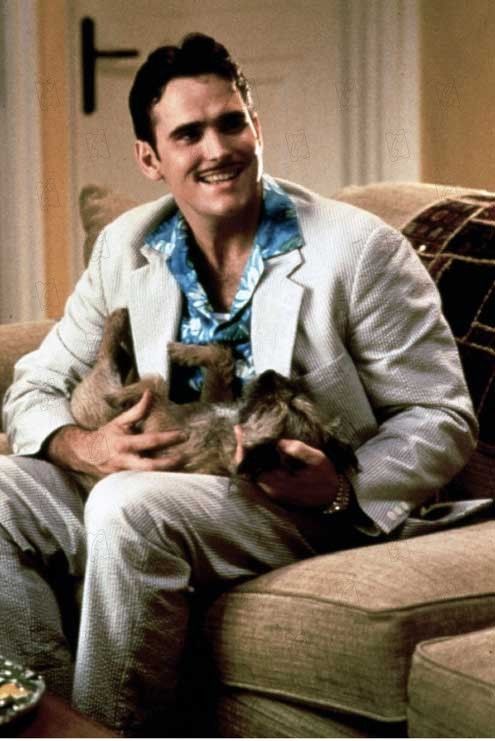
The scene evokes Matt Dillon's big-toothed character in "There's Something About Mary" when pretending to impress Mary and her mentally retarded brother, he utters the famous line, "Those goofy bastards are about the best thing I've got going."

I suppose when your the host of your own conference, you can say anything. How he got away with such appaling quips is hard to figure. Must have been one hell of a buffet in the press lounge.

With Bush Down, Demos Find Vigor To Fight Bailout

$700 BILLION BAILOUT JUST ANOTHER RUSE TO HELP RICH FOLKS BOTTOM LINE

It took the mainstream media about 72 hours to find the backbone to criticize the Treasury Department's $700 billion giveaway.

It actually took them seven years to finally stand up to President Bush the Bully. It shouldn't matter that his lame duckiness is at its lowest of lows or that he seemingly doesn't care about anything anymore. The Democrats are finally asking the pertinent questions with some vigor.

You might wonder how the dogged administration finds the wherewithal to trot out their oldest scheme: framing the issue around fear and perceived retribution against the left if the small possibility of what terrible thing might happen actually happens.

How many times can the Bush You Cried Wolf use this Machiavellian maneuver? Hopefully not this time.

It took until Monday for Democrats to vehemently question the wisdom of giving Treasury Secretary Henry Paulson's unfettered control over what would be the largest sovereign fund in the world.

The New York Times ran four stories yesterday, including an editorial and opinion piece by Bob Herbert that laid into the idea of giving so much money to the very people who have nearly destroyed the economy.

Peter S. Goodman's probing page one news analysis featured three economists who blast the proposal.

Dean Baker, co-director of the liberal Center for Economic and Policy Research in Washington, said “It’s almost amazing they can do this with a straight face. There is clearly skepticism and anger at the idea that we’d give this money to these guys, no questions asked.”

But, Allan Meltzer, a former economic adviser to President Reagan is closer to the real issue concerning bailing out private institution under the guise of the people's interests.

“This is scare tactics to try to do something that’s in the private but not the public interest,” he said.

It is a bit disingenuous for the President to hold the risk of recession over the public and Congress when it is very likely that a recession is in our midst regardless of the current near meltdown. The question now is how bad and how long.

What's good for business is good for America. Herbert Hoover believed so and our MBA-toting Commander-in-Chief believes the same.

The largest transfer of wealth from the poor to the rich has occurred under W's watch. The surging flow of dollars from creaky one-bedroom apartments to million dollar McMansion's has come with a price that, regardless of election year special circumstances, has fomented deep and latent anger in the 98% of Americans leaving in modest means.

The threat of economic meltdown if the status quo continues is too close to the silly arguments leading to the invasion of Iraq for the comfort of the electorate.

It's telling that the cost of this proposed bailout is nearly the same price tag as our adventure in Iraq. The same price that would shore up universal health care and probably fix up some of our school's that look like shanties with desks and mismatching chairs.

Like the war in Iraq, the mega-bank bailout leaves this question to be pondered: who stands to benefit?

Probably the same guys who financed and profiteered from the war--the banks-and you thought $3 ATM fees were steep.

Tuesday, September 23, 2008

Sentence I Wished I Wrote, Part II

You came looking for me, didn't you?
Yes, she said, I only then did she know.
I'm glad you didn't lie. I don't like liars. He put his finger under her chin.
What's your name?
She tore her head away.
My name is Hypatia Belicia Cabral.

No, he said with the gravity of an old-school pimp. Your name is Beautiful.

-From the Pulitzer Prize-winning novel by Junot Diaz, "The Brief Wonderous Life of Oscar Wao".

Monday, September 22, 2008

Stark Nearly Pushes The Panic Button

CONGRESSMAN URGES CONSTITUENTS TO SEEK FINANCIAL ADVICE

BY STEVEN TAVARES
The Pioneer

Coming precariously close to ringing the financial panic button, Congressman Pete Stark told a group of San Leandro residents to secure their bank accounts as the nation falls closer to an economic meltdown.

“I'm going to urge each of you to seek advice over the next week from someone who isn't selling anything, not from a broker or a financial adviser, but from someone who you think has good financial understanding about whatever you might do,” said Stark.

He acknowledged the current financial crisis is the greatest threat to the pocketbooks of regular Americans since the Great Depression.

“We're in deep trouble,” said Stark, “Perhaps the most serious crisis since the 30's—probably worse. In the 30's we were not interdependent on other countries economies. Today is a different world. We are effectively owned by other countries.”

Stark, who founded Security National Bank in 1963 and parlayed it into a congressional career that has seen him re-elected 16 times to Washington, gave the group a bit of financial advice.
He called individual savings accounts, which are secured up to $100,000, “as sure a bet as you're going to get.”

He went further, advising those with money market accounts to think about switching them to FDIC-secured savings accounts.

We're going to have to pay for this thing. I've looked and I've looked and there is no tax fairy who's going to put that money under my pillow. - Stark

Money market accounts, which typically have higher yields also include some financial risk in return, have been hit hard by the downturn in the economy, despite an infusion of $50 billion by the Treasury last Friday.

The advice conjured up ominous images of Depression-era borrowers standing in long lines to withdraw their life savings from banks.

Transferring such accounts usually comes with penalties that Stark believes should not deter bank customers from looking at the bigger financial picture.

“I would give up a little income to make sure my cash is safe.”

Stark says a vast majority of the $700 billion bailout proposed by the U.S. Treasury will be borrowed from overseas institutions such as China, Japan and Europe while cautioning that “taxpayers will foot the bill for this.”

The bailout urged upon lawmakers in Washington was formalized last Saturday while Stark was en route to three scheduled town hall meetings in the East Bay.

Like many Democrats, he vowed not to support the bill that fails to aid borrowers struggling to make monthly mortgage payments and taxpayers soon to be burdened with a large increase in debt resulting from a financial crisis simmering on the edge of boiling over for much of the past year.

“All of it goes to large Wall Street firms, there's nothing about protecting the taxpayers or homeowners or even renters whose apartments may be foreclosed,” said Stark, “I certainly couldn't vote for it in its present form. I have no interest in bailing out Bank of America or Wachovia.”

The fallout resulting from the government takeovers of mortgage lenders Fannie Mae and Freddie Mac, the bankruptcy of Lehman Brothers and the $85 billion loan to insurance giant American Insurance Group will effect people of Main Street, said Stark.

He foresees people having trouble paying their Medicare premiums and having difficulty paying for higher education.

Seniors, he believes, will be hit hardest as their monthly Social Security checks will lose spending power, in addition to the shrinking of their nest egg, if they are fortunate to have one in place.
While calling Social Security “secure”, Stark did mock the idea of the Republican's dream of privatizing the New Deal-era benefit as dead in the water.

“The idea of privatizing Social Security is gone. I think we've put that one to rest,” Stark told the gathering of mostly seniors at City Hall, “If anyone want to invest in Merrill Lynch—it isn't there”

Those grossing a half million dollars a year stand to face higher taxes as a result of the recent financial jitters and bailouts, Stark believes.

“We're going to have to pay for this thing,” said Stark, “I've looked and I've looked and there is no tax fairy who's going to put that money under my pillow.”

Friday, September 19, 2008

Keating Five Scandal Is Obama's Hammer

1980s NARRATIVE OF GREED AND DEREGULATION RINGS TRUE TODAY

Ohio Senator Sherrod Brown believes this past week will be viewed as the turning point in the election.

The economy is crumbling in a frightening manner and Sen. John McCain can't seem to smell the burning embers that is the U.S. financial system.

Brown is correct. The economy is staggering, just as McCain's veneer of financial responsibility and reform is melting, yet Sen. Barack Obama has the knockout blow in his possession and must utilize it, now.

That vicious uppercut to McCain's glass jaw is the Keating Five savings and loan scandal of the 1980s.

Joseph Romm wrote at the Huffington Post that scandal offers Obama a "messaging twofer". Romm lays it out this way:

First, the Keating Five scandal provides a point of origin and touchstone for the dishonest and dishonorable way McCain is running his campaign, which has finally become a central point of attack for the Obama campaign. Second, the Savings & Loan scandal also goes to the heart of McCain's anti-regulation, surround yourself with Washington lobbyists, pass-the-buck-to-a-commission approach to our current economic and financial crisis, another point of attack for the Obama campaign.

Some political pundits believe this well-known scandal from McCain's early legislative years could have a backlash by allowing him to highlight Obama's link to Tony Rezko, who was convicted this summer of several counts of fraud and bribery.

The Rezko story never gained legs because as Romm writes a recurring narrative of such behavior has never stuck to Obama.

The Keating Five scandal that broke in 1989 includes some senatorial heavyweight in John Glenn and Alan Cranston. Dennis DeConcini, Donald Riegle and McCain were ultimately given slaps on the risk for steering regulators off the scent of Charles Keating.

Keating's Lincoln Savings & Loan was just a highlight of an overall destruction of the S&L's in the U.S. Over 747 such institutions failed costing taxpayers over $124 billion.

The Federal Reserve spent nearly that just to check A.I.G. afloat this week in comparison.

Obama must bring this narrative to the forefront of his campaign speeches. It is quite possible the campaign is poised to unleash such an offensive during the first presidential debate Sept. 26. Such timing may give Obama the most reach rather than relying solely on expensive ads and 20-second sound bites.

If for some reason, the Obama campaign finds it beneath them to forge such an attack. Five-twenty-sevens like MoveOn.org and Democracy For America need to use their extensive budgets to buy advertising, send letters and email members regarding the clear link between the McCain's policy of financial deregulation during the S&L scandals and today's economic meltdown.

A campaign does not possess many instances where the the boxing taunt, "one punch will drop ya" is available. Obama has it, now lay the lick on McCain.

Americans On The Rebound; Palin Dumped

UNFAVORABLE RATINGS RISE; AMERICANS SEE FEMALE BUSH IN VP

Several polling services are reporting Gov. Sarah Palin love affair with American voters is over. New poll number are illustrating a precipitous drop in her popularity.

Sorry, Sarah. They once loved you, now they don't. Such is politics.

Why the drop?

It couldn't be because she said something the electorate didn't like. She has not uttered nary a word to one journalist unwilling to parrot the Republican party line. She's still attractive. She didn't wake up one morning flush with acne. She's still the VPilf, as some has called her.

The progressive left, especially bloggers, may have incurred some damage with daily pieces tearing into the Alaskan governor. But, these stories were self-inflicted wounds by the McCain campaign for failing to properly vet Palin.

The campaign should have been ready for Troopergate by simply, as McCain says, doing "a Google" on the controversy. Her daughter's pregnancy, inane white lies on her part and tales of Cheneyesque behavior in Juneau should have been handled before she was ever offered the VP slot.

Yet the power of the liberal netroots cannot take full credit for bringing Palin back to earth. It's the American people's seemingly long memory regarding all-things George W. Bush.

Palin has come across as the true heir to the secretive, arrogant, manna from God type of governance that will be history's record of President Bush.

Believing the United States' role in the Middle East wars are presiding over by Providence is soooo 2002, Sarah. Failing to know the infamous "Bush Doctrine" reminds Americans that Palin is unqualified for the job VP and invokes unease when she lamely stumbles over simple questions a la Bush.

Bob Woodward's latest book on the Bush White House, "The War Within" ends with a brief conversation so littered with nonsense and stark foolishness that it scares the pants off the reader. Is it appropriate for a president to say, "awesome" and describe generals and aides as such?

The pretty cover plastered over Palin is n0w tattered. Americans see that not only does the emperor have no clothes, but the woman seeking to be a heartbeat away does not look good in the nude.

Thursday, September 18, 2008

Man Versus Beast; Beast Wins

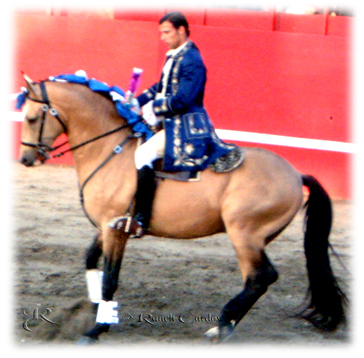
Portuguese forcados pile up in an attempt to stop the on-rushing bull. Bullfights, typically held on Monday nights, attract large followings within the dense Portuguese population of the California Central Valley.

BAREHANDED FORCADOS CAN'T SUBDUE BULL; TWO INJURED AT GUSTINE FESTIVAL

By STEVEN TAVARES
The Pioneer

GUSTINE, Calif.(Sept. 15) - Michael Lopes was minutes from meeting the bull agitated by the horse-ridden matador.

The bull, all thousand pounds of muscle, speed and ground beef, was doing what stereotypical bulls do. He raked the barren soil with his hooves and chased the horse with blind anger.

In the meantime, the cavaleiro—the rider adorned in aristocratic garb teased the bull as he instructed the horse to perform a few tricks and pirouettes in the centuries-old equestrian tradition of dressage.

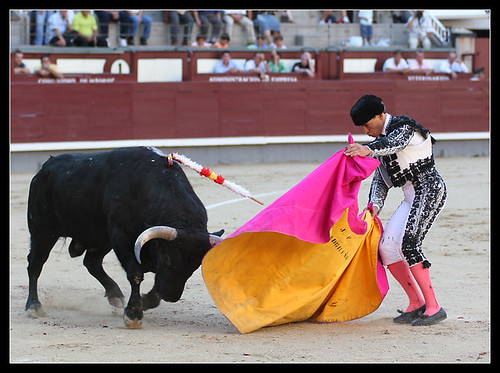
In Portuguese bullfighting, it is the mounted cavaleiro who revels in the spotlight, not the cape-wielding matador as typically seen in Spanish bullfighting. The Portuguese do not mortally wound the bull, at least until 2002, when the government legalized fighting bulls to the death. However, the act is illegal in the United States.

Instead, the cavaleiro relies on garland decorated javelins tipped with something similar to Velcro to attach his spear to the bull's shoulder blades.

Lopes and his team of seven other forcados—also known in the states as the “suicide squad”--are the final act in this bullfight. Their job is to not only subdue the rampaging bull but to do it with their bare hands. (Watch a video of forcados in action, here.)

They wear stately embroidered red coats with a thin red tie tucked into a wide red sash tightly wrapped around the forcados waist. Tight copper pants with long white lacy socks finish off the ensemble.

It's a nervous time for the suicide squad. As they await their cue, some animately chat with each other in a nervous matter of speak. Others hop in anticipation, while a few stand with their backs to wall, sullen with terrible blank stares, “What did I get myself into?” they seem to be thinking.

During this particular bout, the cavaleiro is having a difficult time tormenting the disinterested animal.

Bandariheiros—helpers dressed in tight fitting light blue and pink outfits—try to animate the bull by waving their pink and gold capes. This picks up the pace, but the bull is dangerously filled with energy too close to the entry of the forcados.

Before his triumphant exit, the cavaleiro elicits a brief moment of action. Clutching a blue javelin, his horse scampers before the bull. The bull is now tailing the horse like a stock car racer kissing the bumper of the lead car.

His horns at the horse's backside, the bull jerks his head upward to gore the equine with his horns.

At the last moment, the horse accelerates out of danger. Demoralized, the bull eases up only to find the cavaleiro doubling back to stick the spear into the bulls muscular shoulder blade.

The crowd roars as the cavaleiro makes his final sweep around the ring. White roses are thrown and he exits.

This is the suicide squads cue.

Jorge Martins acts as their coach. He roams the outer ring of the arena like a hockey coach, passing advice and choosing which of his men will be up to the task of bringing down the bull.

Like a baseball manager tabbing his rookie pitcher to start his first game, Martins doesn't announce who will be the caras—the lead man to confront the animal—until minutes before showtime.

He chooses Lopes.

This will be the seventh time this season Lopes will perform the pegas de caras—the face catch.

The team jumps the fence in unison and gathers at the center of the ring in a single-file line. It is interrupted with two husky men side-by-side near the middle of the formation. The bandariheiros are busy readying the bull at the far end of the ring.

“You don't hear the crowd. The only thing you hear is your captain talking to you,” said Lopes,” You're just locked in on the bull waiting for him to come. When you have to reverse it's a split second thing”

Lopes stands poised. His human instincts to fight or flee are at a heightened level. He slowly cocks his head back, lunges forward and stomps his feet before the bull while ushering out a guttural roar from his lungs.

There's a problem, though. The bull did not seem to care that eight humans are ready to take him down.

The element of surprise is now firmly on the beast's side.

“Usually when you provoke the bull the first time he comes, but he wouldn't. I just wanted to get it over with” said Kevin Vieira, 24, from Fresno.

After a more deliberate stomp, the bull begins to turn his attention towards the group. The line begins to lose it rigid shape to witness the bull's inaction.

“We're single file so you don't know when the bull is coming until the guy in front moves,” said Vieira, “The bull wouldn't move, so we were zigzagging.”

Another stomp from Lopes and the bull rushes.

Lopes frantically backpeddles as he is taught and catches the bull's head with his rib cage. His body twists and jerks from the immense strength unleashed by the angry animal.

One by one the bull drives into the mass of human bodies as they pile up on his head he slowly comes to a stop.

The last forcados job is to grab the bull's tail and pull with all his might. The crowd again roars as the forcados release the bull's head to leave the lone man spinning in a neat circle as the bull chases the man clutching his tail.

There's a mix up in the transition, though.

Twenty-year-old Eddie Mulgado, in just his third bullfight, is caught in no man's land. Lying prone before the bull, Mulgado is just feet away from the unleashed bull.

The bull pounces on the unprotected Mulgado and quickly smashes his heavy hooves on him.

“I could feel the presence of the bull's head on my back,” said Mulgado, “Things happen so quick that I didn't know what was going on, they just told me to stay down.”

Bandariheiros flash their capes to distract the bull away from the object of his ire and Mulgado flees the scene.

A fearful pall casts over Mulgado's face in his dash—the exact replica of every eminently doomed teenager in any slasher film moments before death.

Once he realizes his mortality was safe, his expression turns to anger and he punches the arena wall.

“I felt like I let the team down,” he said.

When order is restored, the cavaleiro, his bandariheiros and Lopes basked in glory as they wave triumphantly to the crowd clutching flowers.

Lopes, 19, a sophomore at St. Mary's College, was uninjured except for a few scrapes.

He says he's quite superstitious regarding his hobby. He even makes a point of attending Sunday Mass just in case.

His routine has worked so far, he's never faced a serious injury in three years of bullfighting, yet his father worries about the imminence of that day coming.

“It's like the actuary tables that insurance companies use, the longer you do it, the more you're at risk for something going wrong,” said Frank Lopes, “So, just like anything else, you've got to know when to hang it up.”

Lopes' mother and grandmother have never attended one of his bullfights and his sister has only attended a few.

The fear of witnessing a family member face such violence is quite universal among the suicide squad.

“It's really easy to enjoy it when you're watching someone else that you have no connection to,” said Frank Lopes.

Steve Lemos, 29, has been a part of the team for 11 years and he still receives gentle hints from his wife that he should quit.

She has reasons to be worried.

Lemos tore up his left knee this year and suffered a broken jaw which wired his mouth shut for seven weeks and caused him to shed 25 pounds on his already lanky frame.

Lemos turned his shaven head to reveal another injury: a large “J” shaped scar from the glancing blow of the bull's hoof.

The offending bull was tall and had a propensity to learn quickly, Lemos said.

“He went to defend himself with his horns,” said Lemos, “When I lined up and called him a second time and went to him, he came up with his horn right in the bottom of my jaw and picked me up by my jaw and that was the end of that.

“You've got to respect what you're doing and you have to go out there confident in the boys behind you,” said Lemos. “As long as you've got people you trust and people that know what they're doing behind you, it's relatively as safe as anything else.”

Yet broken down to its most basic parts, it's still man versus beast.

“It is an an animal out there and it's defending itself and you're going at it—it's very dangerous,” cautioned Lemos.

This point became very evident during the group's second bullfight later that night as full moon hung over the Cental Valley night.

A new lead man replaced Lopes and faced a superior bull that quickly adapted to each of the forcados attempts to quell his anger.

“The bull was coming in fast and low. We just couldn't stop him,” said a spent and sweaty Derek Santos of Turlock.

On each of the five attempts to subdue this particular bull, the same scene occurred with casualties slowly mounting.

The lead man would react slowly to the advancing bull, fly off violently and sometimes flip under the rampaging bull while holding on for dear life.

The eight men were demolished every time like the Kool-Aid man busting through a wall. A bowling ball rushing through pins comes to mind, but bowling pins do not break like these men.

Martins, the leader of the team, quickly reassessed the situation, made personnel changes and instructed the team to close the space between each forcado.

“He told us to make the bull hit all of us at once, so he wouldn't have as much power,” said Santos.

After a fifth and ultimately final attempt, the bull left a young man unconscious with a gash on the back of his head and another with broken ribs and a punctured lung.

As paramedics tended to both and attached an IV and heart monitor to the last victim, the once complimentary crowd turned angry.

Older Portuguese men, seeing their own sons in these young gladiators, rose to their feet with as much menace as the snarling bull and yelled towards the organizers, Vai por rua!--which colloquially means “get out of here”, at least, in polite terms.

In Portugal, the forcados usually return to the ring for as many times as it take to subdue the bull. On a recent trip to the Azores, it took seven tries to bring down the bull, Santos said.

Tonight, five times was enough.

The arena soil, once littered with the prints of horses and bulls now showed the unmistakable parallel lines of stretchers and the shoe prints of medical personnel.

The forcados paced the outer ring of the arena. Most with stuttering limps and bent over at the waist in exhaustion. The young men once filled with nervous exuberance, now more closely resembled a beaten regiment of World War I soldiers disoriented in their dirty trenches.

“I'm going to be sore tomorrow,” said Santos, “I'm going to drink a lot of wine tonight, I can tell you that much.”

McCain's Campaign Could Use A Dose Of Viagra

GOP SHOULD BE FEARFUL OF ANOTHER BOB DOLE DEBACLE

The New York Times' Adam Nagourney makes an insightful observation in today's edition comparing the late-election season campaign of Bob Dole in 1996 to John McCain.
These days, Mr. McCain sounds less like his old self than Bob Dole, another Republican senator who ran for president in 1996, sounded in the closing days of his campaign — speaking louder or repeating statements that he thinks might be overlooked. “The American economy is in a crisis!” Mr. McCain said. “It’s in a crisis!”
The comparison to Dole is something that has always been evident, even without dwelling on each senator's relatively advanced age.

Both Dole and McCain were the so-called "next in line" candidate that the Republican party tends to favor. Both are war heroes who suffered debilitating injuries to their upper bodies and both faced energetic and youthful Democratic foes; first with Bill Clinton and now with Barack Obama.

More telling, though, is the total lack of excitement or grand vision in both septuagenarian campaigns. McCain's running mate, Sarah Palin, even attracts infinitely more excitement on the stump than the actual nominee.

When Dole ran against Clinton, there was a definite sense that his campaign died on the vine, never blossomed and just accepted defeat without a whimper.

McCain's lone offensive in this campaign has been the pick of his VP and a slew of negative and outrageously false ads that followed in its wake. He tauts change without a plan for such a future and laughably believes our shambolic economy is some how "fundamentally strong".

The crux of Nagourney's article is the emasculating of McCain by his campaign. No longer is the Arizona senator allowed to be himself. Gone are the snarky comments, crude jokes and biting wit. Basically, all the things independents and some Democrats have come to love in McCain.

In this sense, McCain becomes more like Al Gore in 2000, when he too became someone alien to his self.

McCain is a fine politician and relatively trustworthy towards helping ordinary Americans, except that particular version of McCain is no longer with us.

Version 2.0 of the Straight Talk Express is dull and predictable and beholden to the dirty self-interests of the ultra-conservative right wing. His campaign has calculated he can't win without this sect of the party and have neutralized the real McCain from jokingly calling a smart-allecky high school student "a jerk" when he asked him about his age.

Instead, McCain drones on and on and on....

Monday, September 15, 2008

Sentence(s) I'm Glad I Didn't Write, Part I

"I thought I might die," he said. "This thing tossed me like a salad." The storm tossed much of the island the same way.
Homeless Galveston resident Daryl Thompson describing the force of hurricane Ike in the New York Times, Sept. 14. Unfortanately, Times reporters, Ian Urbina and John Schwartz continued the lewd sexual reference with the second sentence. Message to the Times editors on 42nd Street: Get out of the office and get kinky.

Friday, September 12, 2008

Cindy McCain's Life Of Privilege And Depression

WHAT DOES HER ADDICTION TELLS US ABOUT JOHN McCAIN?
The veil of invisibility is finally being lifted from Cindy McCain's battle with addiction.

Tom Gosinski, as former employee of McCain's non-profit in the late 80s and early 90s is speaking out reminiscent of those battle hardened Swift Boaters of 2004.

Gosinski had previously under the radar because of a fear of retribution from the McCain campaign.

In 1993, he bore the brunt of the senator's legal power after speaking to the DEA about Cindy McCain's illegal procurement of prescription drugs from her own non-profit. Extortion charges were never filed against Gosinski and his own wrongful termination suit ultimately fizzled after running out of money.

Surprisingly, Gosinski emerged this week with diary in hand and shocking insights into the possible future first lady private life.

It's quite likely, that Democratic moneybags guaranteed Gosinski legal safety in exchange for slimming Cindy McCain.

Gosinski told the website The Raw Story potentially damaging tidbits that were not reported in today's Washington Post article or the lengthy New Yorker profile on Cindy McCain currently on newsstands.

Most interesting is Gosinski's opinion that McCain is still using.
Even now, more than a decade-and-a-half later, Gosinski says he's not convinced that Cindy has cleaned herself up. Asked if her behavior in public and on the campaign trail this year mirrored his experiences in 1992, Gosinski agreed.

"I'm probably looking too closely, [but] I would say yes," he said in an interview. But I've got a biased opinion on that."
An excellent profile of McCain in the New Yorker by Ariel Levy seems to point to the beer distribution heiress being aloof in public, almost sullen and rife with contempt. Could this be what Gosinski is referring to when he notices similarities between Cindy McCain now and then?
In April, at a barbecue for the travelling press that the McCain's hosted at their ranch in Cottonwood, guests said McCain kept herself apart from the group while her husband indulged in his usual japery with the “jerks,” as he affectionately calls reporters. If the group was on the lawn, Cindy moved to the porch. If the porch was invaded, she drifted elsewhere. She was like a bird that stays within view but takes flight if you come too close.
Levy also wrote Cindy McCain never once made eye contact with the reporter.

What emerges in all three stories on McCain's addiction is a propensity for shifting stories and downright fabricating others. As Levy describes it, she seems like a woman not based on reality but of television and the silver screen of generations past.
The stories that Cindy McCain tells all tend to have the same elements: secrecy, unilateral action, revelation. She is a kind of blond Lucille Ball in these tales, always up to something, never wanting to be found out by Ricky. But her madcap (if genteel) fifties-housewife sitcom persona is complicated by the more troublesome aspects of these anecdotes. She often leaves out a detail or two, omissions that change the shade of the story.
McCain has shaded the truth on many occasions:
  • She lied about Mother Teresa's involvement in the adoption of her child in Bangladesh.
  • She lied about how she confronted the senator with her desire to adopt the child. She had the child on the tarmac and McCain simply said, "Ok"
  • She muddles the dates and circumstances of first meeting the dashing military man, John McCain, 17 years her senior.
  • Once denied the existence of a prenuptial agreement with the future senator.
  • Made unclear if John McCain previously knew about her early addiction. Sen. McCain once removed his wife from the hospital before word leaked. This occurred before the tale of her parents confronting her about her addiction.
Much of this story may, like other tabloids stories swirling around this election season, may seem unimportant. According to the Washington Post story, "McCain's conduct left her facing federal charges of obtaining "a controlled substance by misrepresenting, fraud, forgery, deception or subterfuge."

An expert told the paper that McCain could have faced a 20-year sentence for her actions. Instead, Washington lawyer, John Dowd, also of Pete Rose fame, used his powerful connections to get McCain out of legal hot water, according to the story and corroborated by The Raw Story article.

This fact brings a certain amount of credence to the severity of her actions and further allows the media to focus on its meaning and merits within this election.

These stories run counter to the campaign rhetoric that says the McCain's are just like ordinary Americans. Far more than her wealth and the perception that she became the senator's so-called political sugar mama or the flub that had John McCain callously forgetting how many homes he owned; this snapshot of a sad, lonely and despondent woman portrays McCain as a nowhere close to the profound protector of the family values that Republicans so value.

What does it say about the character of the would-be-president of the United States, if his wife says she never saw him but for weekends as she lay depressed and in a solitude while her children were raised in dysfunction? Is McCain not only a political opportunist, but one in every facet of life?

Stop Talking About Palin; Start Talking About My Empty Wallet

VP CANDIDATES ARE USUALLY IMMATERIAL; MAYBE NOT THIS ELECTION

When political discourse becomes gossip page fodder, something is deeply wrong. Since Sen. John McCain announced Gov. Sarah Palin as his VP candidate, the horrendous political calculation is still evident. A highly green politician buttressing a rickety presidential candidate became a worry. Campaign-wise, the Palin pick has succeeded beyond any McCain campaign operatives dreams. Republicans win when the issues are secondary or non-existent. This election is now about Palin shooting guns and Palin wearing lipstick like a pig.(?)

Palin all the time has nothing to do with the issues confronting Americans. Palin isn't going to help create real jobs and increase wages. She is not going to help out energy policy other than further engorged the oil companies and health care won't be solved.

That the Obama campaign has been caught so flat footed by Palin is quite worrisome. They did not underestimate her as much as they did not place enough importance to the VP no matter who it was. This is rational thinking. People don't vote for the bottom of the ticket...ever and everyone knows the VP job is nothing more than ornamental. This election is so different than any other in this country let alone the world that conventional wisdom goes out the window.

When Barack Obama announced he would move his convention speech to the 80,000-seat Invesco Field, the prevailing wisdom was that McCain could never fill even one-fourth of the stadium. For months, the campaign has fretted over the fact that McCain has struggled to attract voters to his events. Since teaming with Palin, the problem no longer exists. Ironically, voters still are not enthused by McCain, but flock to see Palin so much now that the campaign is contemplating having the ticket appear together for fear of having Palin's events dwarf McCain's

Most likely the Palin phenomenom will die and the election will become about issues rather than personalities. What worrisome, is that Sen. Joe Biden is kissing old lady's in Pennsylvania in spite because they say they won't vote for a black man or a suspected Muslim, meaning the stigma of racism is very real especially among older voters. The same demographic that tends to vote religiously.

If Palinpalooza still has legs by her vice presidential debate, the Biden factor may further stoke the current media coverage that focuses on, what Obama calls "phony outrage" and less on kitchen table issues.

McCain and Palin seem adept at using gender has a wedge issue. There is no other politician in America that is more ill-equipped to traipse around possible land mines regarding gender than Biden.

The Delaware senator is biting, funny and satirical and prone to saying the wrong thing, which actually is a euphemism for saying exactly what you and me would say under the same circumstance. Once can imagine Biden being neutered in that debate while Palin exudes in the same politics of low expectations that scored Bush debate wins over Al Gore and John Kerry despite clearly flailing.

It's telling when the Grand Wizard of dirty GOP politics, Karl Rove, is preaching to Obama that he's paying too much attention to Palin, it's another problem when an presidential election is less than two months away and we're talking about subjects that have no bearing on the lives of ordinary Americans.

Thursday, September 11, 2008

A Sentence I Wish I Wrote, Part I

The Brady is the master and commander, the alpha and the omega, the cock and scrotum, the very living tissue of everything Patriot, the sine qua non of the National Football League.
--Equire's Tom Chiarella perfectly describing New England Patriots quarterback Tom Brady in the September issue.

Tuesday, September 09, 2008

You're Doing A Heck Of Job, Paulie

BUSH COVERS HIS ASS; PLAN TO RESCUE FINANCIAL GIANTS RESTS ON TREASURY SECY.

President Bush comes from a business background. Would you expect any less of him covering his executive ass than any other corporate hack?

The New York Times' Sheryl Gay Stolberg brings us the inside scoop on Treasury Secretary Henry Paulson's "plan" to bail out Fannie Mae and Freddie Mac from financial oblivion.

The scoop is: It's all on you, Hank!

“He was all the way in the driver’s seat, and that was where the president wanted him,” said Tony Fratto, Mr. Bush’s deputy press secretary, adding, “The sentiment was, ‘You’re in charge, and I hope it works.’ ”

Hilariously, the author attempts to draw a distinction between Bush's regular sentiment as "The Decider" and this occasion when Paulson is determining the government's policy by saying the president is well educated in economics.
For a president like Mr. Bush, who holds a master’s degree in business administration from Harvard and has strong economic views of his own, Mr. Paulson’s emergence as the administration’s primary voice on economic policy is striking.
Like the war in Iraq, the events leading up to the bailout of these two mortgage giants is a story of government inaction and a suspension of government oversight and regulation.

In my previous life as a mortgage banker, I routinely encountered employees of various mortgage companies requesting customer information. When the figures did not measure up, it was common for employees to blatantly request sending faulty financial numbers. An average balance of around $500 could easily become $2,500 without any oversight.

The government conservatorship of Fannie Mae and Freddie Mac is justified after the administration backed such lax lending practices, but not as a first resort.

At first impulse, a hard-line stand against lender and borrowers seems the most Darwinian method of weeding out this scourge on the American treasury. Sen. John McCain briefly articulated this idea earlier this year before advisors believed it to be lacking populist sentiment.

Did borrowers really believe the panacea of interest-only exotic loans that cost the same amount of capital as paying rent for a two-bedroom apartment was real? No. At least, I hope they did not.

It's the sheer size of this financial debacle that has inured borrowers from taking the full brunt of our economic upheaval. The operative word here is "our". The full brunt of the Bush administration's mishandling of our economy lies at every taxpayer's feet.

The Times story says the cost could run up to $100 billion. What do we get for it? Tracks of unfinished homes in the California Central Valley. Vacant homes with vast brown lawns littered with growing weeds and signs of squatters living in homes that once-about-a-time symbolized the American Dream.

Maybe the white picket fence dream of owning a piece of the American Dream wasn't real during the baby boom years. Today, it's nothing more than a house of cards teetering in a whirlwind of risk and financial ruin.

Monday, September 08, 2008

Shine Some Norhtern Lights On The 'First Dude'

SECRETIVE COUPLE MAY REMIND YOU OF DARTH CHENEY & CO.

Sarah Palin this, Sarah Palin that.

The ImPailing Alaskan governor is either beloved by pious(?) Christian conservatives or reviled by the marching, fire-waving liberal media.

Palin may now be the poster child for the wonders of the political vetting process, but the so-called liberal media should begin to focus on first husband, Todd Palin, who is slowly beginning to look like male version of the obstructive former first lady, Nancy Reagan.

The blog at MotherJones.com briefly taps into Todd Palin's not-very-unseen hand in Juneau with a posting detailing the governor's recently released stash of emails.
Palin's office claimed most of the undisclosed emails were exempt from release because they were covered by the "executive" or "deliberative process" privileges that protect communications between Palin and her aides about policy matters. But the subject lines of some of the withheld emails suggest they were not related to policy matters. Several refer to one of Palin's political foes, others to a well-known Alaskan journalist. Moreover, some of the withhold emails were CC'ed to Todd Palin, the governor's husband. Todd Palin—a.k.a. the First Dude—holds no official state position (though he has been a close and influential adviser for Governor Palin). The fact that Palin and her aides shared these emails with a citizen outside the government undercuts the claim that they must be protected under executive privilege.
Republicans had concerns over another unelected spouse "meddling" despite the people's will. Her name? First lady Hillary Clinton.

For Hillary's sake, she was somewhat informed and hailed by some as entirely competent. Todd Palin, on the other hand, is a part-time Alaskan fishermen.

If there's a national crisis involving Alaskan king crabs, we'll call you, Todd.

Like the supremely secretive current Veep, Dick Cheney, the Palin's have shown a desire to operate under the radar. They couple has also shown a very vindictive and punitive side with their executive power when it comes to solving personal problems and stifling opposition.

The Alaskan journalist, Andrew Halcro, an apparent political enemy of the Palin's; has frequently asked how Todd Palin can evoke "executive privilege" when his proximity to the governor is sleeping with her. Read Halcro's post here.

The Palin's autocratic behavior in Juneau may simply be the product of the inherent small town atmosphere involved in Alaskan politics even at the highest levels.

But, on the heels, of eight years of government secrecy unmatched in American history, attention needs to be paid to Todd Palin's involvement in government matters and specifically the type of dynamic that may exist between Sarah Palin and her husband on matters of policy and decision-making.

Sarah Palin is not going to make many decisions other than what pants suit to wear during an overseas funeral appearance if she becomes vice president, but her ability to lend herself to secrecy and mischief is worrisome.

Brady Out For The Season!; McCain's Hemorrhoids

MEDIA COVERAGE OF A McCAIN HEALTH ISSUE WOULD BE PERVASIVE

The notion is macabre, but the health of a 72-year-old presidential candidate should be a palpable concern to all voters.

Events this weekend might make you wonder how the media would react to an ailing McCain? How would the Fourth Estate react to a Ariel Sharon-type scenario where the country's leader is incapacitated indefinitely?

When New England Patriots Super Bowl heartthrob, Tom Brady, went down with a season-ending knee injury yesterday, the sports media went nuts. The Tom Brady Health Watch is still humming along Monday afternoon even as the Patriots announced Brady is out for the season.

SI.com has a Brady watch icon on its headline news section similar to links that monitor every ball and strike or first down and yards gained--"UPDATE: Brady ordered non-fat milk and Cheerios for breakfast. Nurse returned. Out of milk. Brady ordered orange juice and ice chips."

This, of course, is the greatest quarterback 0f his generation. The amount of news coverage on the leader of the freeworld would be unimaginable.

BREAKING NEWS: McCain's hemorrhoids have flared. Surgery set for 4pm. Palin in the ass is itching to be sworn in.

Friday, September 05, 2008

Bush's Last Days...In Jail?

PINOCHET PRECEDENT PROVES PROBLEMATIC FOR TRAVELING BUSH

Word that President Bush is looking for a ghostwriter for his obligatory post-presidency memior is really too easy a joke for future comedy writers.

The upcoming feature article on Bush's last days in office in this Sunday's New York Times Magazine by Peter Baker contains some sizable tidbits (Times link is available until Sept. 11).
  • Sources seem to imply that Sen. John McCain, through a letter to the president, urged him to increase the military force in Iraq or risk losing the war.
  • Bush is looking to buy a home in Dallas, while honing his faux Texan accent (you know, God Bless 'Merica)
  • A shocker: Bush does not plan to travel the globe as an ambassador of goodwill a la Jimmy Carter and Bill Clinton.
This is the most interesting tidbit. Baker does not elaborate on this point, yet many legal scholars fear a few in in the administration, notably Donald Rumsfeld, Dick Cheney, Douglas Feith, Stephen Hadley and the president could be detained overseas by rogue magistrates similar to the incarceration of Chilean dictator Augusto Pinochet. Click here to read about the theory of universal jurisdiction.

It is well known that Henry Kissinger frequently inquires about his freedom before arriving in foreign countries. Could this be the post-Bush future.

The inability to visit foreign lands shouldn't be much of a bummer for the notoriously inattentive mind of Bushie. Besides, most countries don't have hot dogs.

Wednesday, September 03, 2008

Holbrooke: Domestic Energy Policy Is National Security Issue

Richard Holbrooke, the foreign envoy and frequent name drop as Secretary of State in a possible Obama administration, makes a few interesting points in the latest issue of Foreign Affairs magazine.

Among other points, Holbrooke identifies the need for the next president to engage Turkey, Afghanistan, Iran, Iraq and China. He also advises torture be clearly renounced and prisons at Guantanamo be closed.

The most important matters according to Holbrooke are of extreme importance to the strength of the American empire. He mentions the historical fact that world powers tend to decline as a consequence of economically overextending themselves.

Holbrooke says the $475 billion a year transfer of wealth from the U.S. to Arab oil producing countries along with Venezuela constitutes a potential challenge to American interests in the decades to come. The stirring in countries like Venezuela where President Hugo Chavez is expanding his influence over South America could be the tip of the iceberg.

The most important paragraph of Holbrooke's readable treatise is this:
To restore the United States to its proper world leadership role, two areas of weakness must be repaired: the domestic economy and the United States' reputation in the world. Although the economy is usually treated as a domestic issue, reviving it is as important to the nation's long-term security as is keeping U.S. military strength unchallengeable. This will require more than a cyclical upturn; to repair the economy in the long term, a new national policy on energy and climate change will be essential—not because it is nice to be popular but because respect is a precondition for legitimate leadership and enduring influence.
It is important to note being popular is not just for national back slapping but for, as Holbrooke says, “respect”. It is clear that rising powers like Russia feel compelled to challenge the weakened American president with blatant incursions in the Causcasus. Whether its Medvedev or Putin at the controls, the Kremlin's disregard for numerous cease-fires and boldface threats to Poland and Ukraine is a direct function of American futility during the Bush administration along with a posture that sought to humiliate the Russian psyche post-1991.

It was interesting that Sen. Barack Obama, last night, during his acceptance of the Democratic nomination, said he will aim to make the nation free of foreign oil dependence in 10 years. How he will do it is unclear, yet the mere acknowledgement of this problem to the security of our country is something that must become a kitchen table discussion from now on.

Tuesday, September 02, 2008

Gun-Totting Palin And Daughter's Shotgun Wedding

MYSPACE PAGE OF OFFENDING BOYFRIEND SAYS, 'IF YOU F*** WITH ME, I'LL KICK ASS'

Gov. Sarah Palin and her family worthy of a drama on the CW Network and also known to Sen. Barack Obama as the gift that keeps giving is bringing daddy to St. Paul according to The Associated Press.

The New York Post tracked the young high school hockey sniper, Levi Johnston, through his MySpace page and found him to be, well, as immature as any 17-year-old jock.
On his MySpace page, Johnston boasts, "I'm a f - - -in' redneck" who likes to snowboard and ride dirt bikes.

"But I live to play hockey. I like to go camping and hang out with the boys, do some fishing, shoot some s- - - and just f - - -in' chillin' I guess."

"Ya f - - - with me I'll kick [your] ass," he added.

He also claims to be "in a relationship," but states, "I don't want kids.
Just as the entire disclosure of Bristol Palin's pregnancy could not get more preposterous, her father now says that the couple had previously contemplated tying the knot before she was knocked up.

Exactly what every high school senior dreams about: settling down. Sixty-year-old evangelical couples sitting in an affluent mega-church might applaud such action, yet outside of such pretzel logic, you have to believe such a decision is not as tidy as the VP's statement that her daughter would be "growing up" faster than they would like.

Monday, September 01, 2008

Palin Smoked Doobs; Had Hippie Children


FOUR OUNCES OF POT IS LEGAL IN ALASKA; WHAT ELSE IS THERE TO DO?

Without any sourcing, London's Timeonline reported Sunday McCain's VP candidate, Sarah Palin, smoked marijuana in Alaska while it was legal in that state.
Counterbalancing McCain’s reputation as a political dinosaur, Palin smoked pot when it was legal in Alaska, admitting, “I can’t claim a Bill Clinton and say I never inhaled”, and her children, Track, 19, Bristol, 17, Willow, 13, Piper, 7, and Trig, four months, have hippie-sounding names. Track, who joined the US infantry in September last year, is about to be deployed to Iraq. “
Two things: isn't it hilarious that a British-based reporter would conclude in his copy the idea that the names of Palin's children sound like something out of the sixties and that marijuana was once legal in Alaska.

In fact, the Alaskan Supreme Court ruled in 1975 that possession of four ounces of marijuana in the home is legal. In 2006, then governor, Frank Murkowski attempted to recriminalize pot. Palin also supported the ban on her way to winning the election.

Sunday, August 31, 2008

San Leandro City Council Approves Ballot Measures

By STEVEN TAVARES
The Pioneer Sports Editor

The San Leandro City Council overwhelmingly approved a police services parcel tax be added to the November ballot and increase revenue as citizens grapple with higher incidents of crime and a faltering economy.

The parcel tax, if passed, would add $2.3 million to the city’s dwindling coffers and would apply to both residential and commercial properties.

Under the plan approved by the council, the average single-family dwelling would pay $48 per year for the next three years.

The perception that crime in the city has been on the upswing for much of Mayor Tony Santos first year in office has been a hot-button issue.

Santos caused a firestorm of criticism when he stated in February that crime statistics refuted the fears of many in the community that their quality of the life was suffering.

Many on the council July 28 expressed compassion for the public safety in their support for the measure.

“When I walking door-to-door, people told me they wanted more beat officers,” said Jim Prola, “It’s inexcusable to have six officers for seven beats during the night.”

“We have crime and what are we going to do about it?” said Councilman Michael Gregory, “We have a duty to protect the people.

Councilwoman Joyce Starosciak, who abstained on the vote, said her constituents cautioned against adding a new tax on the heels of a likely economic recession.

An informal polling of her district communicated to her that “times were not good for taxes.”
Starosciak added, “The people are asking for more police, this tax does not add more police.”
San Leandro Police Chief Dale Attarian said the parcel will not add more officers, but will allow the police department to continue to fund the previous hiring of two new officers and add a crime prevention officer,.

Attarian cautioned that if the measure fails, the city would have to revert to deficit spending and possibly begin cutting positions in the department.

The police services parcel tax was not the city’s first attempt this year at raising revenue through taxation.

Earlier in the year, the San Leandro Unified School District initially considered proposing a similar parcel tax, but ultimately decided against its feasibility in the current economic climate.

San Leandro City Manager John Jermanis said the city allowed the school district first crack at exploring a parcel tax with the belief that two tax initiatives would both fail.

“I remain unconvinced that with the downturn in the economy and that the school district concluded their own parcel tax would not carry that we are being hopeful and sanguine and not right-minded,” said Vice Mayor Bill Stephen, who was the lone vote against adopting the ballot measure.

San Leandro resident and former city council candidate, Lou Filipovich, believes that such a tax will trickle down to residents other than property owners.

“Renters are the first ones who will get hurt,” said Filipovich, “Do you think a rental owner will pay this? It’s the renters who will foot the bill.”

In addition to the police parcel tax, the council also approved adding two ballot measures that will seek to secure two sources of revenue generating nearly $5.5 million per year.

The Utility Users’ Tax and 911 Fee are both mired in legal battles over their legality and could possibly be struck down, therefore, denying the city much-needed revenue.

The State Supreme Court may take up the 911 fee case this year after numerous California municipalities including Stockton, Ventura and Union City approved their inclusion to city budgets.

Proponents argue the fee constitutes a tax without the public’s vote.

Both fees would be secured by this measure in the event their current legality is overturned.
Proponents have strongly cautioned both measures would not increase taxes.

Charles Gilcrest, a candidate for the city council’s second district this November, told the council that the key to the measures passing lies in better communicating its value to the public.

“We are not asking them to raise the tax,” said Gilcrest, “As a fee, you could raise it anytime you want. As a tax, you can’t raise it without the voters. This is about voter empowerment.”

Saturday, August 30, 2008

The Mother Of All Ironies; Gustav Near Big Easy

CONSERVATIVES LOVE GOD; GOD DOESN'T LOVE THEM BACK

Despite what the Republican National Committee might think, the name Gustav is not a Swedish derivation for Katrina. It does mean the “staff of God” and for a party so enslaved by the Heavenly powers, the swirling storm aimed at New Orleans can be nothing by God's reckoning.

It is totally the height of irony that a large scale hurricane would move towards the Crescent City and marshal in the same worries and precautions such as evacuating the city two days before the GOP opens its own lovefest in the Twin Cities thousands of miles away.

Reports that the RNC would postpone the convention for hurricane Gustav seem implausible and logistically impossible. A rainout of an event when the climate of a faraway city is the cause is both laughable and a ominous sign of how weak the party actually views itself.

If, indeed, the United States is in the midst of a decades long decline, the handling of hurricane Katrina will occupy of a stinging point in the minds of historians for centuries.

With such stories coming into sharp relief, how can McCain run from the failed policies of President Bush? Do we even need the stark reminders of the tragedy of Katrina to recall that the government nearly let New Orleans die, if it isn't still of life support, anyway.

Do we need to read about another soldier being killed in Iraq to remember that McCain favors continuing the most dangerous foreign policy decision in modern American history.

Postponing the convention on account of a storm thousands of miles away is foolish, the signs of disrepair of in plain sight of every American. Just drive down the street. Pass a gas station and try to remember the last time you filled your gas tank.

Friday, August 29, 2008

Suddenly Working Women Become Campaign Issue

Dick Cheney eats babies. Sarah Palin has contempt for motherhood.

Within hours of Sen. John McCain tabbing the Alaskan governor as his vice presidential pick attacks from progressive female commentators have already risen from the din of the punditocracy.

The issue: Palin has a four-month infant born with Down Syndrome. She infamously returned to the governor's office three days after giving birth and now begins her precipitous climb from the Wasila City Council to vice president in just ten years.

Kim Stagliano, a contributor to the Huffington Post, who herself has three children with autism, finds herself struggling with the role of working women and their families.

I believe in a woman's right to any career she desires. Yet as a mother of kids whose needs have taken precedence over my career for over a decade, I know the realities of special needs parenting. And I find myself asking a question that makes me feel like Donna Reed: Once you've chosen to have five children, and your infant has special needs, who needs you more, your family or your job? And if I can ask this touchy, old fashioned question, I wonder if conservatives will warm to a woman willing to make such a profound family sacrifice.

This issue, supremely destined to be pursued on programs like The View and Oprah, are at the heart of McCain's hugely risky choice of Palin.

It could work fabulously with the dialogue benefitting McCain's apparently tack towards Hillary Clinton supporters, but it could also come at the expense of working class men who might view the issue through the glasses of contempt for professional women.

It's a gamble that McCain has invariably analyzed with the metrics showing a net profit of votes over Palin and an unwillingness of those same working cllass men to vote for a black man.


McCain's Choice In Palin Shows Panic

44-YEAR-OLD ALASKAN GOV. MUTES TALK OF OBAMA'S INEXPERIENCE

Sarah Palin was hardly the under the radar vice presidential pick that the New York Times and Salon.com will have you believe.

Her appeal of youth, strong socially conservative views and proximity to energy issues in the vast Alaskan wilderness made her a dark horse candidate.

Was Palin the right pick? It depends on your foresight.

The choice of Palin out of relative obscurity is a brilliant very short term move. It takes the spotlight away from what many are initially calling one of the most brilliant convention speeches in American history by Barack Obama and moves towards another historic moment--the first female veep choice in GOP history.

The choice of a unknown, especially in the internet age, is a smart marketing move. Assuredly, Palin has been googled extensively and her webpage has been bombarded. The natural question of 'who is she?' quickly become an exercise in interactive politics.

There are huge problems, though, with McCain's choice that shines a light on his present frame of mind. Palin's state is one of the epicenters of controversial energy policies that McCain hopes to exploit, except she strongly supports a huge natural gas pipelines through her state that McCain opposes.

Did the McCain camp view Obama's choice of Joe Biden as significantly shoring up his perceived lack of experience that they surrendered the point by picking an even more inexperienced politician in Palin?

The issue surrounding McCain that his campaign is choosing to neglect is age. He apparently feels that he relatively advanced age (for a presidential candidate) is such a non-issue that the electorate will not take the extra step in their collective minds to pose the question: Is Palin ready to take his place and more importantly, would America be interested in an overly experienced vice president a la Dick Cheney to run the levers of power in Washington during a Palin administration?

What this pick does not do is make a particularly hard play for Hillary Clinton supporters. Illinois congressmen Rahm Emmanuel is completely correct when he told The New York Times the only similarities between the two is gender. It's inconceivable that a female Clinton supporter would possiblly be interested in an anti-abortion, evangelical Christian. Their hard feelings only run so deep.

One thing is for sure, the upcoming vice presidential debate between the viscereal Biden and the woman once named "Sarah Barracuda" for her tenacious high school basketball style should be political pugilism at its best.


Thursday, August 21, 2008

Cal State East Bay Soccer Suffers Ugly Duck Status

By STEVEN TAVARES
The Pioneer Sports Editor

Forgive Jair Fory for feeling like Sisyphus.

Instead of carrying a boulder up a hill only to watch it roll back down, the Cal State East Bay men’s soccer coach is dribbling a soccer ball with same fate as the mythic ancient Greek.

Without a set roster less than week before the season, unavailable practice fields and a key performer from last season’s squad academically ineligible, the preseason has not been kind to Pioneers soccer.

“It’s very frustrating. They want a team, but how can I have a team without having them tryout first?” said Fory, “It’s like we’re going forward three steps and two back.”

Tensions between the men’s soccer team and the athletic department began to heat up when a notable returning starter from last season was deemed ineligible last Friday.

A discrepancy in the player’s transcripts was discovered precipitating his ineligibility.

Fory placed blame on the athletic program saying, “It’s their job to keep track.”

CSUEB Athletic Director Debby DeAngelis says an investigation is currently underway and hopes to have the issue resolved before the team opens its season Aug. 29 in Spokane, Wash.

Failure to monitor an athlete’s academic progress raises questions as to how the program will handle similar issues in the future when participation in Division II increases the amount of oversight needed for awarding scholarships.

“We’re on probation now for Division II, right?” said Fory, “If we can’t handle this, what if they put off allowing us in Division II?”

Last Monday, Fory held a tryout for over 40 new and returning players.

He says he will need to cut the roster to under 25 before opening the season.

His frustration increased when the planned two-a-day practice at Pioneers Stadium was moved to the upper soccer field primarily used by the women’s soccer team when the pitch was unmowed and without field stripes.

To make matters worse an inoperatible riding lawnmower was left on the playing surface making any practice time a possible liability for the university.

Said Fory, “It’s my first day of practice and I don’t have a field to practice. DeAngelis said a work order to the Facilities Department was sent weeks in advance, yet only the upper soccer field typically used by the women’s team was prepared.

Women’s Head Soccer Coach, Amy Geracie, whose squad also practiced last Monday, said field management has never been a problem in the past.

“This is just a one-time occurrence,” she said.

“It’s a stressful time of year for any coach,” said DeAngelis, “He’s got more people than he can keep, so he has to make some fairly quick evaluations and decisions.”

The perception that the Pioneers men’s soccer is the ugly stepchild of CSUEB has been pervasive for a few seasons said senior defender, Jordan Ferrell.

“There’s been a lot things I’ve seen here,” said Ferrell, “We do seem like the neglected program down here.”

While he admits that players on almost every team have qualms with the program’s treatment, his stories usually trump all others.

“I know people on a lot of the other teams here and they all think they get screwed, but when I tell them my stories they usually agree ours are worse,” said Ferrell.

Ferrell describes numerous instances over the years of sprinklers inexplicably interrupting practices and rumbling lawnmowers and tractors making communication on the field negligible.

He also said a team-organized practice on the CSUEB field this summer was broken up the university police.

“We’re not asking for Division I treatment, but we should be treated like intercollegiate athletes, at least,” said Ferrell.

DeAngelis said she was not aware with discontent on the soccer team and offered an open-door policy.

“I make a big point of saying, ‘If there’s something that needs to be fixed, I need to know about it,’” said DeAngelis, “I can’t fix what I don’t know is broken.”

DeAngelis says she has repeatedly offered Ferrell, who also participates in the student government and was a major student proponent for Division II, a spot on the Student Athletics’ Council.

On the pitch, Fory was impressed by two possible additions to the team in freshman Manuel Cardenas, an athletic defender who he calls a “smart tactical player” and junior transfer Chris Prado, a left back from Stockton.

Fory tried out Cardenas at sweeper Monday, a position the coach says needs to be filled and indicated he performed well.

A team-wide dearth of fitness, though, seems to have plagued some returning players according to Fory.

“I was kind of surprised about some of the guys who played before,” said Fory, “I think they’re not—flat out—in shape. That’s going to be a major problem.”

If the team is to succeed this season, the onus is going to be on the players to reach their potential.

“It’s shows commitment, especially coming from the guys from previous years,” said Fory, “It’s up to the athlete on what type of commitment they want to have. They know what the expectations are and if they fail those targets, it’s their own fault.”

Thursday, August 14, 2008

CSUEB Athletic Budget May Not Be Enough

AD SAYS FEES COULD INCREASE AGAIN IN THREE YEARS

By STEVEN TAVARES
The Pioneer Sports Editor

The University has contended its plan to move the athletic program to Division II would increase the school’s visibility and encourage campus pride—if only our teams are competitive.

According to budget data compiled by the U.S. Department of Education via the Equity In Athletics Disclosure Act (EIADA), the extra $1.5 million the athletic program would receive through a student fee increase would only place Cal State, East Bay seventh out of 12 California Collegiate Athletic Association (CCAA) schools.

CSUEB Athletics Director Debby DeAngelis projects the 2009 budget—the first year the Pioneers will compete in the CCAA—to be roughly $3.2 million, ranking above San Francisco State, Stanislaus State, Cal Poly Pomona, CSU Monterey Bay, CSU Dominguez Hills and CSU San Bernardino.

“What we said is that we want to be in the top half. Four schools will still have a larger total budget than we do,” said DeAngelis, “The commitment to put us in the top half is being met”
In fact, six schools operated during the 2006-07 school year with a budget greater than CSUEB plans to compete with in 2009.

Sonoma State leads all CCAA schools with a budget last year of nearly $4.4 million and includes one of the nation’s top Division II baseball programs.

They are followed by U.C. San Diego at $4.0 million, Chico State at $3.9 million, Humboldt State at $3.8 million and CSU Los Angeles at $3.7 million.

In addition, DeAngelis said the athletic program will be split from the Department of Kinesiology by 2009. Currently, only 40 percent of coach’s salaries are reflected in the CSUEB budget.
By 2009, the entire coaching expenditure will be solely reflected on the athletic program’s budget, making the current $1.9 million the school reported to the EIADA to be less than it actually seems.

Bill Fusco, the director of athletics at Sonoma State said that salaries and benefits are a huge part of an athletics budget. He said 70 percent of his budget is allocated to coaches.

“The cost of operating an NCAA Division II program really depends on the costs of salaries and benefits of the coaches and administrative staff,” said Fusco.

He believes a Division II program can be competitive on a budget of $2.8-$3 million, not including scholarships.

Sonoma State raised scholarship money solely through fundraising as oppose to the student fee increase used at CSUEB.

“The phrase we use in athletics is a ‘level playing field’. Are we putting ourselves were we have the facilities and the resources and money is just part of it,” said DeAngelis, “Are we funded well enough to level the playing field so that on any given day we can win that game? I think we are.”
DeAngelis said the university is looking to upgrade facilities for the soccer teams and softball.

She also hopes to upgrade the campus swimming pool from 25 yards to the standard 50 meters.

A greater emphasis on wins and losses may ultimately become a larger factor on campus with the move to Division II.

“We’re going into a conference that is extremely successful in Division II. If we can be successful in the conference, we’ll probably be successful in Division II,” said DeAngelis, “We have to get to the point we’re we can compete. I have faith that we have the coaches who can do that and initially we can put the resources in place for that to happen.”

DeAngelis also indicated that coaches are held accountable for maintaining, at least, a .500 winning percentage and that criteria will continue.

With the basic premise that competing in Division II needs to equate to winning, what if the planned budget fails to produce results?

While confidence is high, DeAngelis did not rule out the need to possibly raise student fees in the future or some other type of increased revenue.

“It will be huge if the university continues to grow the way we think it will. That way there would be more money available with more students,” said DeAngelis, “It’s conceivable that we could look for ways to generate more money.”